
Dear Will:
With all due respect to “The Star-Spangled Banner,” when it comes to patriotic anthems I’m all about “America the Beautiful.” I can sing either one with full-throated enthusiasm, but when they cue up “America the Beautiful” I have to brace myself, knowing that if the music director decides to go for all four verses, chances are very high that I won’t get through it all without my full-throat catching and my eyes misting over.
Perhaps Katharine Lee Bates’ wonderful lyrics have had the same effect on you. Her tribute to pilgrims and patriots and soldiers are fitting evocations of the love of country and countrymen that lies at the heart of what has made my beloved nation remarkable—in spite of its various flaws. The third verse, in particular, always speaks to my soul:
O beautiful for heroes proved
In liberating strife,
Who more than self their country loved
And mercy more than life!
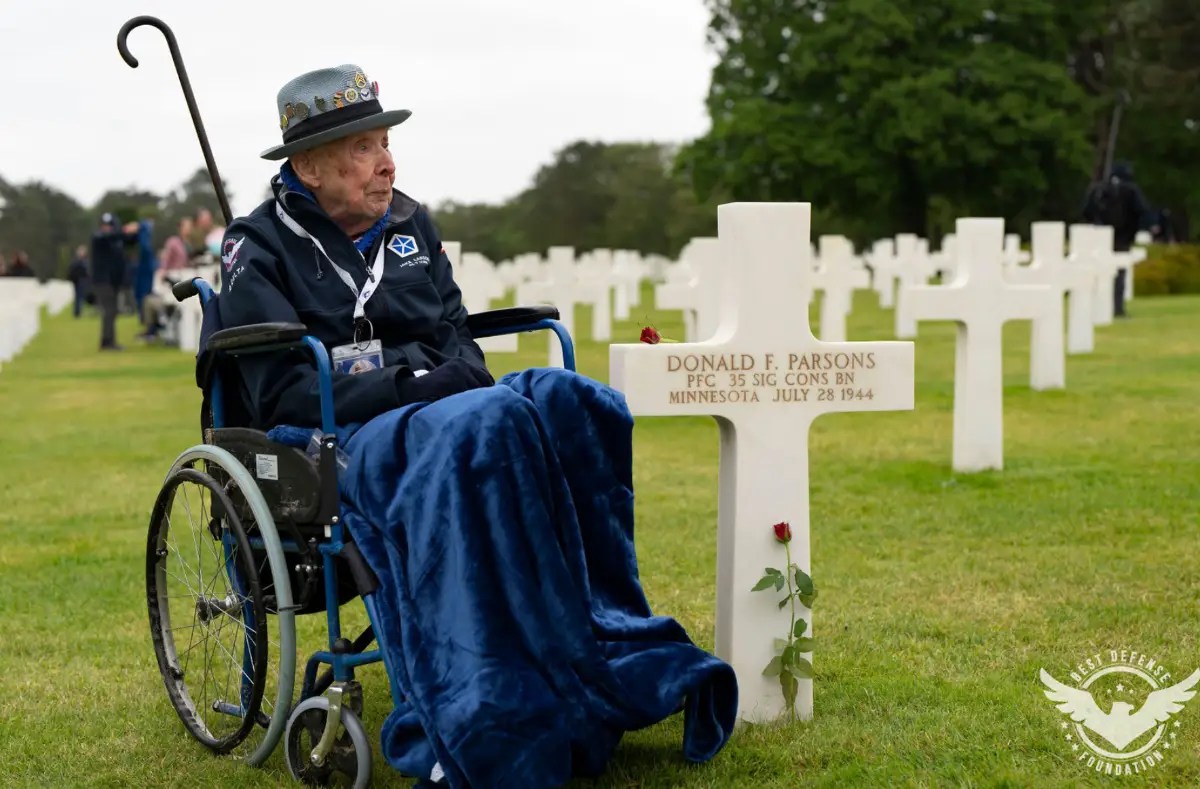
I thought of these words again in recent days while watching the 2024 Summer Olympics broadcast from Paris. NBC ran a segment focused on some of the few remaining veterans of the D-Day invasion who had returned to France to be honored while also paying honor to their many fallen friends and comrades. I felt humbled by these centenarians, now feeble and wheelchair-bound, men and women who embody a selflessness that I could never hope to match. As these aged vets looked out over the cemetery there on the cliffs of Normandy, it was plain to see why these Americans, both living and dead, have been rightly called the Greatest Generation.
I can’t witness such a scene without feeling a deep sense of inferiority and inspiration. I find myself pondering: “What have I done? What sort of sacrifices have I ever made on behalf of others?” It leaves me with a determination to try to be better, do better, make some sort of positive difference in whatever small way I can to make my community, my country, this world a better place for others. I’ve learned to pay attention to such urges when they come because they seem to me a signal of truth, a solemn prompting to pay attention to what I’m seeing and feeling. These are more than mere nudges, I believe; they are God’s way of helping me see the gap between who I am and who I could be.
Occasionally I’m subjected to different kinds of promptings altogether, and I pay attention to them in a whole different way. From time to time I read or hear someone urging me to give in to that other side of myself that puts my selfish interests ahead of others. They will encourage me to take offense where I had not previously, to feel a sense of grievance that had not existed before. Such people would have me vilify those around me who are different, blame them for my misfortunes, call them names and treat them with disrespect and contempt. They even seem to reject the nobility of the cause that brought young men ashore on Omaha Beach and would gladly leave underdogs to fend for themselves against much larger oppressors. What I notice as I hear or read their screeds is that they would have me become a worse version of myself and, in the process, make the world around me worse than it already is. And I wonder: If this is the sort of person we choose to follow, what do you suppose the historians might call our generation?
I’m a church-going fellow, as you know, a guy who has chosen throughout my life to follow the Greatest Leader of them all, one who taught His followers to put others first: to feed the hungry, clothe the naked, visit the lonely and imprisoned. To bear the burdens of others. To answer offense and grievance with lovingkindness. I believe that the best leaders are those who similarly inspire others to strive to become better versions of themselves, who motivate their followers to pull together and achieve something they might not be capable of otherwise. Could I ever justify concurrently supporting someone who actively encourages me and others to do the opposite? It’s unthinkable.
I acknowledge that some may see in their options ambiguity that I do not. If that includes you, may I suggest the following: As you listen to the speeches and consider both the message and the messenger, pay attention to what they are inviting you to do or to become. Then heed the advice of one prophet who taught a simple way to judge: That which invites you to do good comes from God, and that which does not, does not.
Then choose good.
I pray along with Katharine Lee Bates that God will indeed shed His grace on America as we work together to crown our good with brotherhood from sea to shining sea. What will they call our generation? We are about to find out.
PW
Photo: Best Defense Foundation
 Letters to Will