Everyone Singing from the Same Song Sheet

Dear Will:

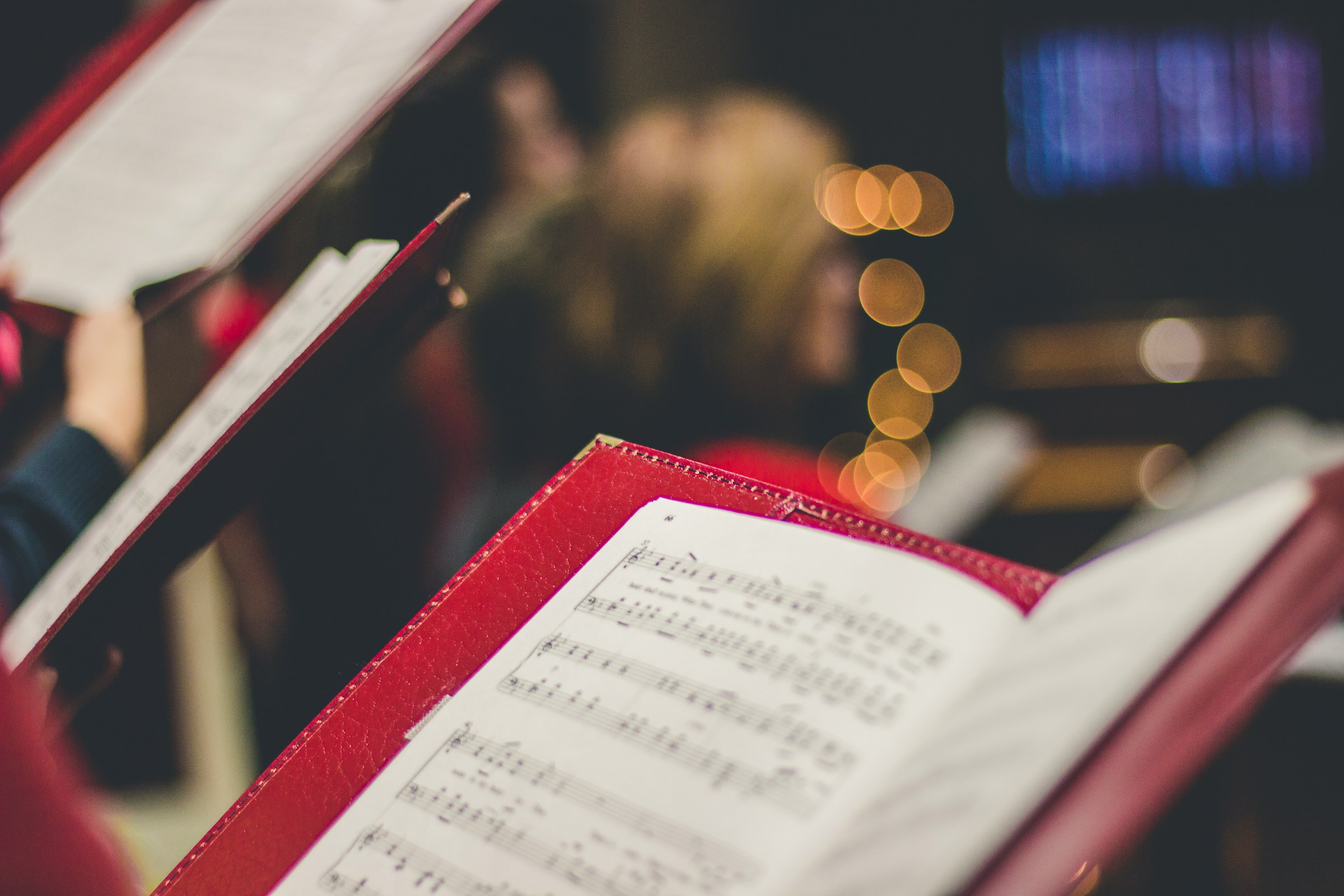
A couple of weeks ago we attended the annual Holiday Wassail Concert at Chapman University. The event, showcasing the Chapman University Orchestra and various choral groups from around campus, featured an array of songs from across the spectrum: from popular, just-for-fun secular numbers like “Sleigh Ride” to sacred and sublime traditional favorites like the Hallelujah Chorus from Handel’s “Messiah.”

It’s hard to say exactly why, but the night kind of snuck up on us. Something about the spirit of the season, perhaps, made us vulnerable, and Dana and I found ourselves feeling emotional from the very first note. The choir and orchestra opened the evening with “O, Come All Ye Faithful,” the much-loved Christmas hymn. All at once the house lights came on and the conductor turned toward the audience, inviting us to sing along.

We tried. We really did. But soon we were fighting tears and choking out, “Sing, choirs of angels; sing in exaltation!” And so they sang . . . but we could not.

Perhaps our favorite song of the night was a magnificent Jewish hymn with which we were unfamiliar: “Hine Ma Tov,” with Hebrew lyrics taken from Psalm 133. The King James translation renders its message like this: “Behold, how good and how pleasant it is for brethren to dwell together in unity!”

Indeed, that is the message of the season, and we were feeling it to our very core. Those choirs of angels had sung something similar on that first Christmas night: “Peace on earth, good will toward men and women everywhere!” That invitation to love and unite transcends both time and religion. It beckons each of us to stop fighting with one another, to break down barriers, to come together as brothers and sisters, fellowcitizens, children of God.

Jesus himself was a Jew, one well familiar with scripture—including, no doubt, Psalm 133. He might very well have preached that same message of unity while sitting on a hillside or standing in the synagogue. His most famous sermon, given on a mount in Galilee, included these words of counsel that still echo across the generations: “Blessed are the peacemakers. . . . Be reconciled to thy brother. . . . Love your enemies, bless them that curse you, do good to them that hate you, and pray for them which despitefully use you, and persecute you.” He called on us to judge reluctantly and generously, to treat others as we would wish to be treated. He taught that love is the ultimate mark of discipleship. He commended those who fed the hungry, welcomed the stranger, visited the sick and the imprisoned.

His empathy knew no bounds.

To some he was a great philosopher, to others a prophet among many, and to others, like us, the very Messiah himself. At this time of year especially, Dana and I celebrate his life and teachings full-throatedly (if we can choke out the words). And to his teachings, we add this prayer of our own: May the feelings we share in December pool within each of us, providing a well of living water from which we can draw throughout the year ahead.

Hine ma tov.

PW

Photo by David Beale on Unsplash

GPT-5 Writes a Letter to Will

Dear Will:

It might not surprise you to learn that I’m a bit of a skeptic when it comes to large language models like ChatGPT. Without much encouragement, I can give an eloquent speech about its likely negative impact on the quality of thought and interpersonal communication in the years to come. If you’re interested in hearing a version of that speech, you can even watch this video from an interview I gave last year.

But look: I realize that there is no stopping the A.I. wave from crashing on the shore. It already feels like we are at high tide, in fact, with a tsunami cresting somewhere over the near horizon. At work the inundation is largely complete, with A.I. access incorporated into virtually every piece of software we interact with over the course of a business day. We are encouraged—mandated almost—to play with our new A.I. toys and see what they can do. It’s a smart exercise, and I’ve encouraged my team—mandated, actually—that they go all in and figure out how A.I. can help them with their work.

So it is that finally, tonight, I have followed through on an idea that struck me many months ago: I asked A.I. (Copilot, to be specific, using GPT-5) to compose my next letter to you. Here is the prompt I gave it:

I write a blog that can be found at http://www.letterstowill.com. Review every entry ever made on that site. It will give you a sense of both my writing style and the common themes and approaches I take when I write a post. Note that I strive to maintain a fairly positive tone with an upbeat “message” for my readers. Then compose the next post for the site. Choose a theme that is timely and that will likely appeal to those who regularly read my blog. 

The machine did a pretty good job. (I did make a mistake in not limiting the word-count, however, so it’s about twice as long as my typical letter to you.) If you’re curious, I’ll paste GPT-5’s letter to you at the end of this letter. But first, some observations:

  • Copilot led with a flattering and disarming commentary on my work. A smart piece of human manipulation, that.
  • It then completely fabricated several interactions I ostensibly had at the grocery store while suggesting that I have a thing for marshmallows (I don’t).
  • It plagiarized me liberally (as you would expect) without providing appropriate hyperlinks or attribution. Given that there were several lovely turns of phrase that were not mine (“If you’re going to bless someone, use the big ladle,” for instance) it left me wondering who else it had borrowed from without citation.
  • It concluded with some suggestions for further enhancements which, given the contrived nature of the entire letter, seemed to me especially creepy.

I’m sure that A.I. proponents would read that fabricated post and be delighted. It really is quite good. But it hurts my heart a bit to think about what would be lost if I relied on the machine to compose a letter to you each month or so. The thinking through and working out and jotting down and repeatedly revising until it’s just about right would all (or mostly) be lost. These letters matter to me, as a means of both reaching out to you in a deeply personal way and leaving a record for my children and grandchildren of what I was thinking about and feeling at a particular moment in time. What a tragedy if my granddaughter one day read about an exchange I had with a stranger in Albertson’s that never actually took place. And what a loss for me if I took that easy way out rather than sharing an actual memory and what it means to me.

Tomorrow I will be back at work, fiddling with Copilot to see if it can help me with my research or simplify a tedious task. I hope it can. But next time you read one of these letters, it really will be me on the other end, sharing a piece of my heart and expressing, perhaps more sloppily than the large language models might otherwise suggest, that I care for you, deep down, and write these letters as a genuine expression of human love. Until then, take care.

PW

Photo by Emilipothèse on Unsplash


GPT-5 “wrote”:

Peter — I read through your archive to tune my ear to your voice before writing. A few patterns stood out:

  • The epistolary opening (“Dear Will:”), a warm anecdote that ripens into a gentle lesson, and a hopeful coda signed “PW.” (“We Love Those Who Love Those We Love,” “Hey, Bub. Your Check Engine Light Is On.”)
  • Self-deprecating humor used as a doorway to something earnest and faith-centered, often punctuated with scripture or a hymn-like phrase. (See “Call Me Woo Woo,” “We Will Miss Him.”)
  • Recurring themes: small acts of compassion, the sustaining grace of community and family, and noticing God’s hand in the ordinary. (e.g., “Her Name Was Faye,” “God Always Shows His Hand.”)

With that in mind—and with the season turning toward Thanksgiving—I drafted the next post on a timely theme your readers already love: choosing to show up in small ways during the holidays when calendars get crowded and nerves get thin.


Draft post for Letters to Will

Dear Will:

Last Saturday morning I pulled into the grocery store knowing exactly what I needed: milk, eggs, and enough maple pecan granola to get me through a week of early breakfasts. I also knew exactly what I didn’t need: the parade of humanity between me and Aisle 6.

There they were, glorious and exasperating as ever: a dad negotiating a peace treaty between two small cart-pirates; a young couple double‑parking in Produce while comparing yams to sweet potatoes (they are not the same, as I learned for the ninth time); and two neighbors in front of the soups, catching up on everything from bunions to Byron.

I grabbed my basket, took a deep breath, and joined the procession.

You would think that at my age I’d have learned by now that we’re never just “running in.” We’re always walking into someone else’s story. Which brings me to the woman near the entrance handing out flyers for the community pantry. The sign on her table read: “Holiday staples needed—today.” As I passed, she smiled without weaponizing it. She just offered it—as if to say, “You don’t owe me anything, but if you want to help, here’s a simple way.”

I took a flyer, kept moving, and then circled back like a salmon against the current. Into the basket went stuffing, cranberries, and pumpkin purée (the large cans, because if you’re going to bless someone, use the big ladle). I added marshmallows on principle. Don’t @ me.

Somewhere between the marshmallows and the self-checkout, a familiar scripture surfaced: “By small and simple things are great things brought to pass.” (You hear that one a lot in my circles.) I could almost feel the Lord winking: This is the season when “small and simple” does some of its best work.

It’s funny how often I need that reminder. My reflex in November is to think big: big meals, big gatherings, big projects to wrap before the year wraps me. But lately my back has been vocal about its preferences, and my calendar has been even more so. The fantasy of heroic service sometimes becomes an excuse to do nothing at all—because the perfect opportunity hasn’t arrived yet with the marching band and a ribbon to cut.

Meanwhile the ordinary parade goes on, and it turns out the baton is very light.

I thought of times when other people lifted it for me without fanfare. The neighbor who once shoveled our sidewalk before we woke up. The friend who texted, “Headed by your house—need anything?” and actually meant it. The nurse who didn’t just check a vital sign but saw me. They weren’t auditioning for sainthood. They were just…available.

It occurred to me that “showing up” is almost always enough:

  • Show up in the grocery line by letting the parent with the toddler go first.
  • Show up in traffic by widening the gap. (It won’t ruin your ETA; it might save someone’s day.)
  • Show up at the table by listening longer than you speak, especially to the cousin whose opinions arrive pre‑seasoned.
  • Show up for the farmer by buying the carrots with a little dirt still on them and saying, “Thank you for growing this.”

None of that gets a plaque on the wall. All of it writes something kind on a human heart.

As I left the store, I watched a young guy jogging a cart back to its corral from deep in the lot. No uniform, no clipboard; just a simple, sensible act that made the place function a bit better for everyone behind him. When he turned, he had the look of someone who hadn’t noticed he was doing anything noteworthy, which is about the highest compliment you can pay to goodness.

On the drive home, I remembered a line I once heard: We love those who love those we love. I’ve seen that play out with our children and our friends; I’ve felt it with strangers who were kind to people precious to me. Maybe this time of year is an invitation to expand that circle one more ring—not merely to love those who love those we love, but to love those whom God loves (which is to say, everyone in the parade, even the yam debaters).

So here’s my modest, November‑sized proposal—no marching band required:

  1. Pick a place you’ll already be this week—work, the store, the trail, church—and pre‑decide a tiny way you’ll show up there. A text. A cart returned. A compliment you actually say out loud.
  2. Do it once without advertising it to yourself as “A Good Deed.” Just make it how you move through the world.
  3. When you sit down to say grace, bless not only the food but the unseen hands that grew it, trucked it, stocked it, and sold it. Gratitude turns anonymous laborers into neighbors.

I know the world feels heavy sometimes. I read the same headlines you do. But I also know the kingdom of God is built on the scale of eye contact and casserole dishes, of doorways held open and names remembered, of “I’m glad you’re here,” said like you mean it. You and I may not be able to fix everything, but we can help the parade move a little kinder.

And when we do, we discover something almost embarrassing in its simplicity: the joy we wanted from the big thing was hiding inside the small thing all along.

PW


If you’d like me to dial the spiritual references up or down, weave in a brief scripture at the end (e.g., Luke 17: “Were there not ten?”) or localize the anecdote (Playa Vista farmer’s market, Bluff Creek Trail), say the word and I’ll tailor it.
“Hey, Bub. Your Check Engine Light Is On.”

Dear Will:

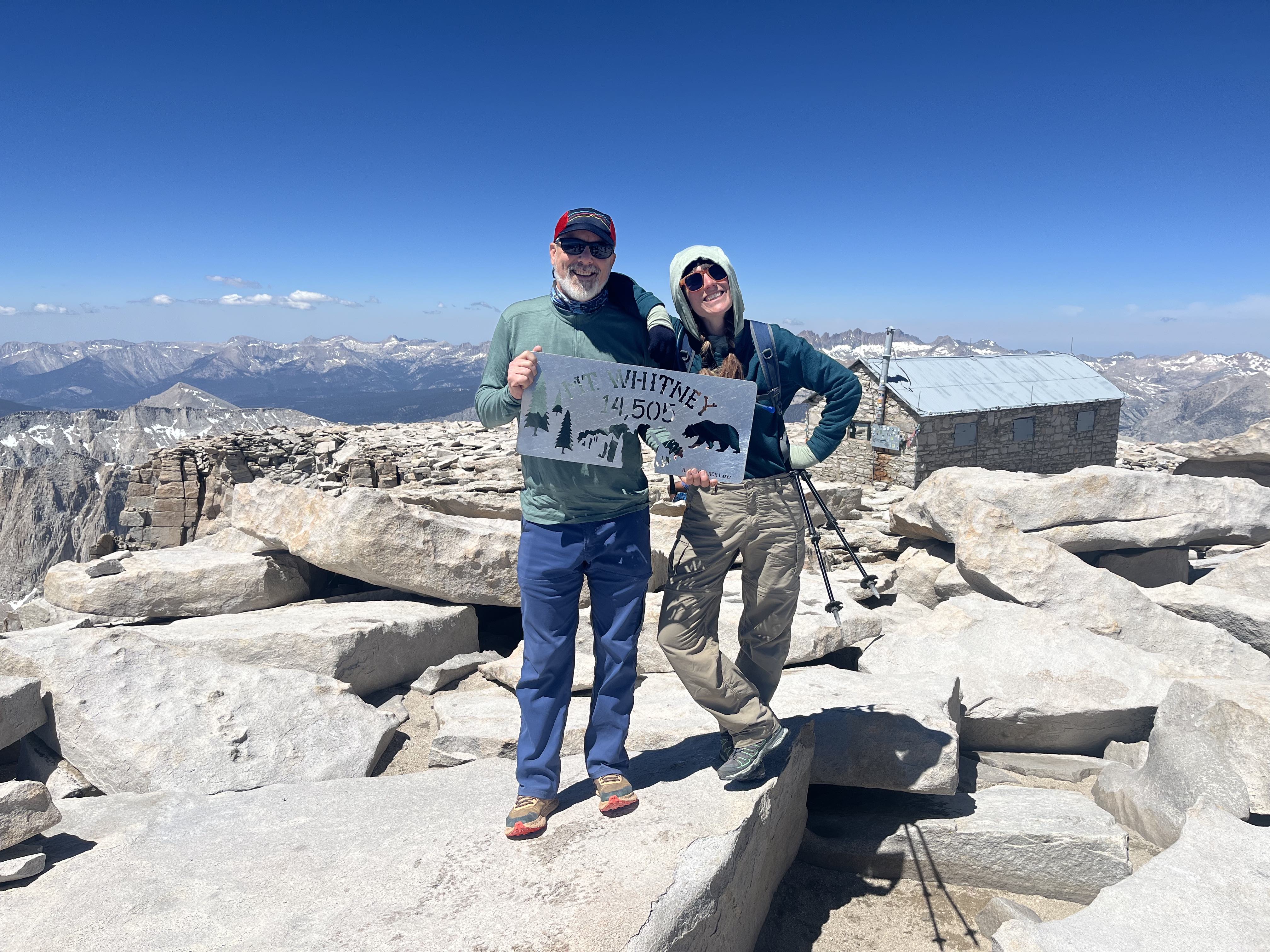
Several years ago, I was down at the church for an evening of pick-up basketball with the guys. That the guys in this case were all quicker, more talented, and 15 or 20 years younger than I hardly mattered. Except on this night. On one play in particular, an opponent took the ball and accelerated toward the basket. Years of experience told me just what to do: slide laterally to block his path and force him away from the hoop. I could see it all unfold in my mind. Unfortunately, my age and lack of fitness betrayed me. I was way too slow to react, so rather than cut him off chest-to-chest, I only managed to stick out one leg and send him sprawling.

He was appropriately irate. I could have easily broken his leg or triggered a torn ACL. Had we been playing soccer, I’d have been sent off with a red card for dangerous play. The game continued, but soon thereafter I found myself losing my footing, knocked to the ground in the middle of the key while the others battled for a rebound. I don’t know how everyone managed to avoid stomping on me. Once again my physical limitations had become a serious threat to ankles and knees, and I was forced to confront a bitter reality. It was clear that I no longer belonged out on that court with those guys. My days of basketball with the fellas on Thursday nights had reached a discouraging, humiliating end. At the next dead ball, I subbed myself off the court and have not returned.

As I said, that was several years ago. Since then I have turned to other activities to try to stay somewhat fit and active. Hiking and running are not nearly as satisfying as a good game of hoops, but they have become my go-to alternatives. I’ve come to really enjoy them, and I figure they are easy, low-risk activities I can do at my own pace and on my own terms for many years to come. 

Or so I thought. A couple of years ago I developed a pretty bad case of sciatica that sent me hobbling to an orthopedist for relief. After an x-ray and an MRI, the ortho offered his assessment that, due to a couple of compressed disks in my back, I was going to have to stop running and hiking. To which I thought: “Yeah, well that’s not gonna happen.” With the help of some anti-inflammatories and a steroidal injection, within a few weeks I was feeling good as new, and before long I was back running my morning 5K and hiking weekends as before. In time I stopped thinking about my compressed spine altogether.

When the sciatica issue returned this spring, I was relatively unconcerned. I returned to the orthopedist, got the steroids again (along with the same concerned counsel about my personal choices), and a couple of weeks later I felt good enough to complete a 65-mile backpacking trip through the Sierras with my daughter. Throughout that week-long adventure, I felt GREAT. No stiffness, no muscle soreness, no nerve pain of any kind. It was exhausting, and I was pretty slow compared to all the 20-somethings I shared the trail with, but it was a fantastic culmination of my 65th year on earth. Plus I felt like I had proved that I could live with a couple of bulging disks and make it work.

That is, until I couldn’t. Four days after Bryn and I returned from Mt. Whitney, I went for a slow morning run, and that afternoon I knew I was in trouble. The sciatica problem returned worse than before—worse than ever by a wide margin. Another round of steroids have helped—some—but the numbness in my quad and the pain up and down my left leg have not gone away. I’m hoping that patience, stretching, and physical therapy will make a difference, but my optimism is now tempered by a growing sense of reality. It’s as if I find myself sprawled once again in the middle of the court, unenthusiastically pondering my reduced set of options.

So it goes as our bodies age. As a rule, our warranties run out early and before long the wear and tear really starts to show. But since we don’t have the option of trading in our rusted old jalopies on brand-new, late-model originals, we have no alternative but to patch them up and find a way to keep moving down the highway. It’s that aspect of mortality that no doubt compelled prophets to encourage us to “endure to the end.” (That’s why they’re called prophets: They can see what’s coming.) They do offer some reassurance from time to time (“thine afflictions shall be but for a small moment” and all that), but when your spine has gone kaput, there’s not a lot of solace in that. 

In any case, I’m determined to make the best of it rather than just settle into the Barcalounger and call it good. I like the idea of staying fit and active for many years to come. There are many adventures that still await me, stunning places to see. With retirement not too far off, there are a lot of things I still want to DO—even if it means finding a way to do those things while placing less stress on my back, unpleasant though that may seem. 

So I guess what I’m saying is: Tai chi, anyone?

PW