“Hey, Bub. Your Check Engine Light Is On.”

Dear Will:

Several years ago, I was down at the church for an evening of pick-up basketball with the guys. That the guys in this case were all quicker, more talented, and 15 or 20 years younger than I hardly mattered. Except on this night. On one play in particular, an opponent took the ball and accelerated toward the basket. Years of experience told me just what to do: slide laterally to block his path and force him away from the hoop. I could see it all unfold in my mind. Unfortunately, my age and lack of fitness betrayed me. I was way too slow to react, so rather than cut him off chest-to-chest, I only managed to stick out one leg and send him sprawling.

He was appropriately irate. I could have easily broken his leg or triggered a torn ACL. Had we been playing soccer, I’d have been sent off with a red card for dangerous play. The game continued, but soon thereafter I found myself losing my footing, knocked to the ground in the middle of the key while the others battled for a rebound. I don’t know how everyone managed to avoid stomping on me. Once again my physical limitations had become a serious threat to ankles and knees, and I was forced to confront a bitter reality. It was clear that I no longer belonged out on that court with those guys. My days of basketball with the fellas on Thursday nights had reached a discouraging, humiliating end. At the next dead ball, I subbed myself off the court and have not returned.

As I said, that was several years ago. Since then I have turned to other activities to try to stay somewhat fit and active. Hiking and running are not nearly as satisfying as a good game of hoops, but they have become my go-to alternatives. I’ve come to really enjoy them, and I figure they are easy, low-risk activities I can do at my own pace and on my own terms for many years to come. 

Or so I thought. A couple of years ago I developed a pretty bad case of sciatica that sent me hobbling to an orthopedist for relief. After an x-ray and an MRI, the ortho offered his assessment that, due to a couple of compressed disks in my back, I was going to have to stop running and hiking. To which I thought: “Yeah, well that’s not gonna happen.” With the help of some anti-inflammatories and a steroidal injection, within a few weeks I was feeling good as new, and before long I was back running my morning 5K and hiking weekends as before. In time I stopped thinking about my compressed spine altogether.

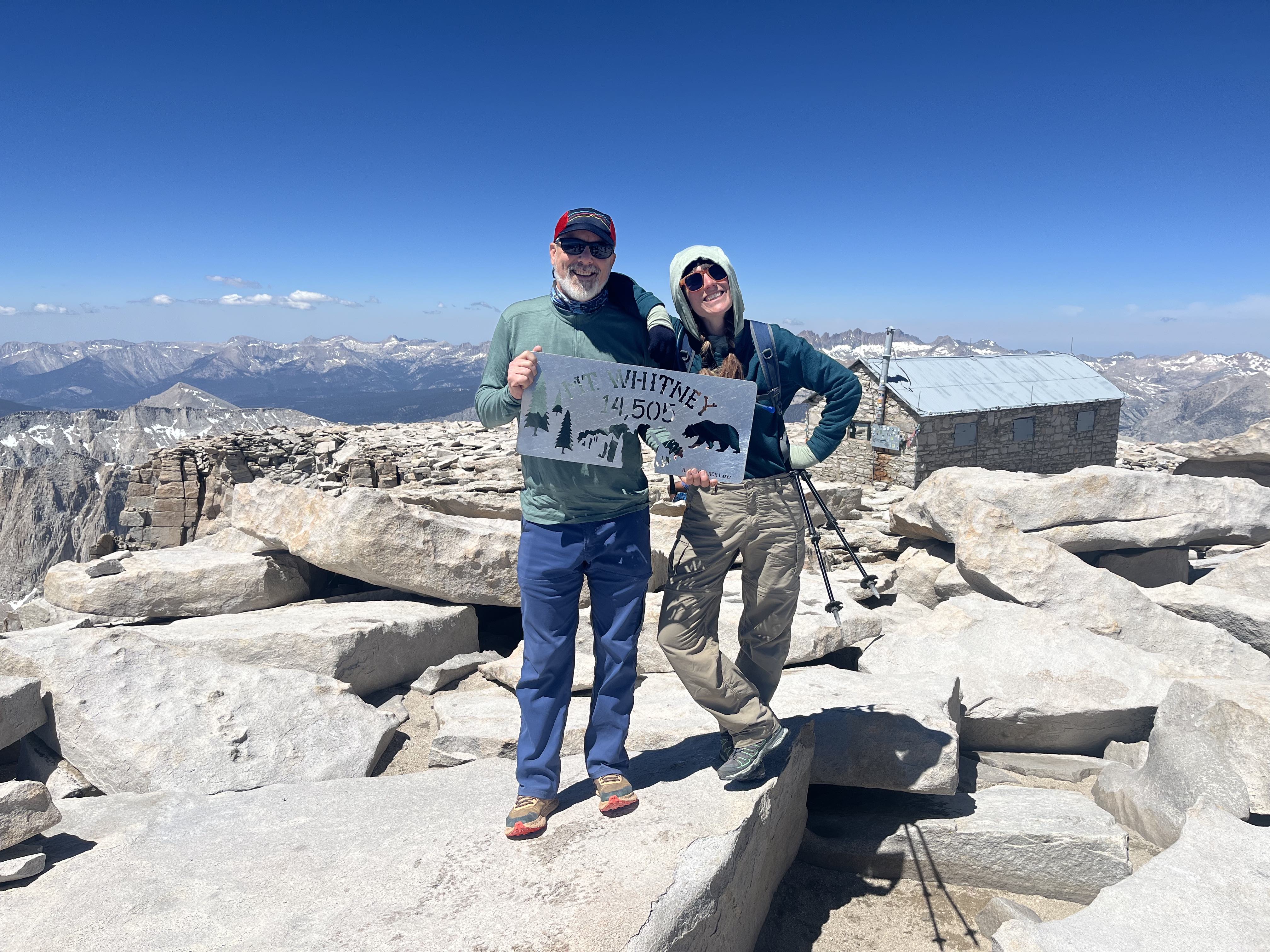
When the sciatica issue returned this spring, I was relatively unconcerned. I returned to the orthopedist, got the steroids again (along with the same concerned counsel about my personal choices), and a couple of weeks later I felt good enough to complete a 65-mile backpacking trip through the Sierras with my daughter. Throughout that week-long adventure, I felt GREAT. No stiffness, no muscle soreness, no nerve pain of any kind. It was exhausting, and I was pretty slow compared to all the 20-somethings I shared the trail with, but it was a fantastic culmination of my 65th year on earth. Plus I felt like I had proved that I could live with a couple of bulging disks and make it work.

That is, until I couldn’t. Four days after Bryn and I returned from Mt. Whitney, I went for a slow morning run, and that afternoon I knew I was in trouble. The sciatica problem returned worse than before—worse than ever by a wide margin. Another round of steroids have helped—some—but the numbness in my quad and the pain up and down my left leg have not gone away. I’m hoping that patience, stretching, and physical therapy will make a difference, but my optimism is now tempered by a growing sense of reality. It’s as if I find myself sprawled once again in the middle of the court, unenthusiastically pondering my reduced set of options.

So it goes as our bodies age. As a rule, our warranties run out early and before long the wear and tear really starts to show. But since we don’t have the option of trading in our rusted old jalopies on brand-new, late-model originals, we have no alternative but to patch them up and find a way to keep moving down the highway. It’s that aspect of mortality that no doubt compelled prophets to encourage us to “endure to the end.” (That’s why they’re called prophets: They can see what’s coming.) They do offer some reassurance from time to time (“thine afflictions shall be but for a small moment” and all that), but when your spine has gone kaput, there’s not a lot of solace in that. 

In any case, I’m determined to make the best of it rather than just settle into the Barcalounger and call it good. I like the idea of staying fit and active for many years to come. There are many adventures that still await me, stunning places to see. With retirement not too far off, there are a lot of things I still want to DO—even if it means finding a way to do those things while placing less stress on my back, unpleasant though that may seem. 

So I guess what I’m saying is: Tai chi, anyone?

PW
Yet Another Handful of Grain

Dear Will:

I’m prepping for another backpacking trip with my daughter, and as I always do I have pulled out a shake-down list I solicited years ago from my friend Warren, who is singularly responsible for my willingness to attempt these crazy adventures in the first place. The checklist is full of the obvious and not-so-obvious (which is why I mooched it to begin with). But there at the top—before he gets to mole skin and duct tape and paracord—Warren includes the following note: “Just remember the lesson we learned: No more than one pass a day!”

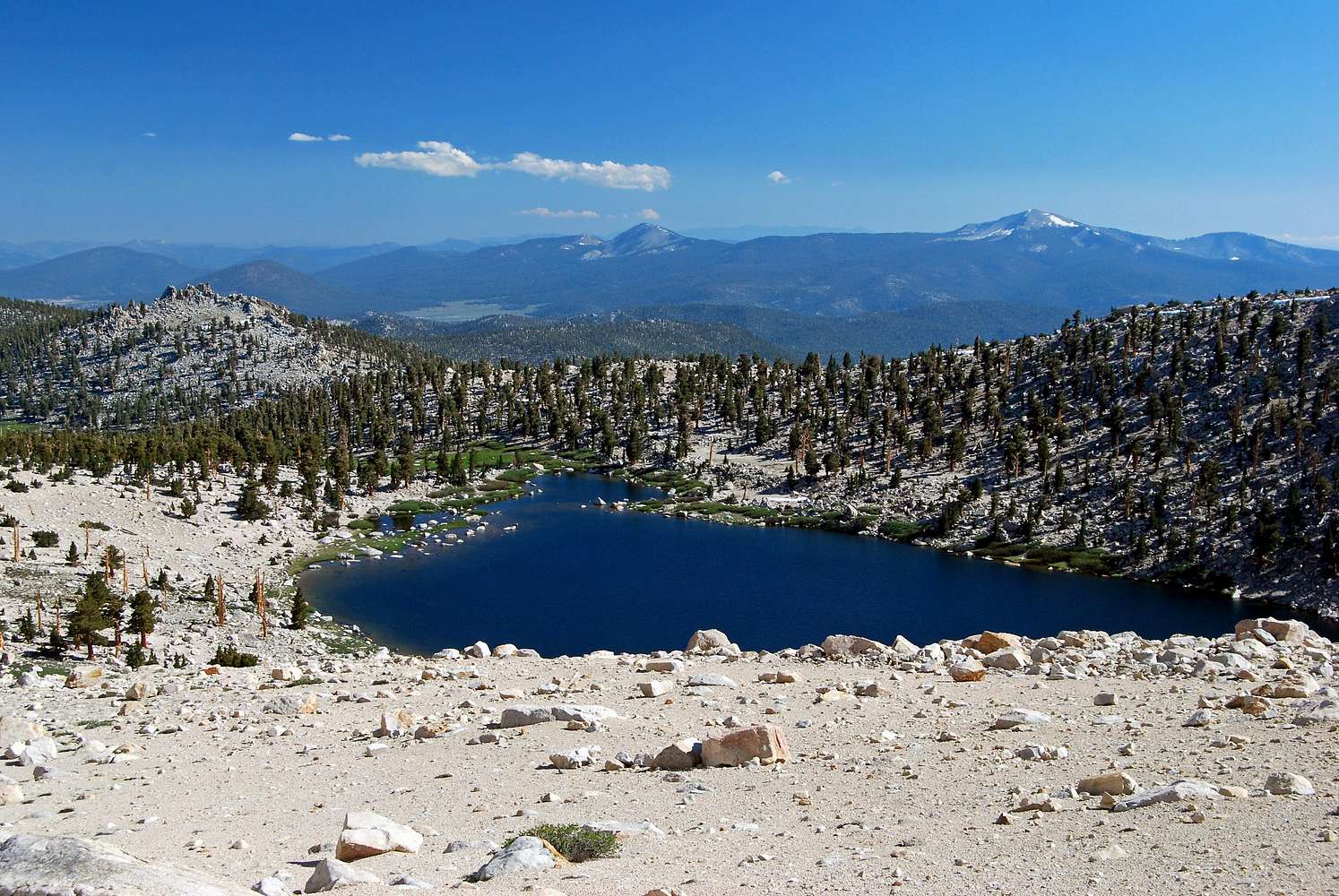
Ah yes, that fateful day coming back from Mt. Whitney when we decided to go over Guyot Pass (10,900 feet), down to Rock Creek (9,820), and then to the meadow (11,060) midway to Cottonwood Pass where we expected to set up our tents for the night. As we approached the meadow, everyone in our group agreed that we could go no further. We counted our steps, wondering how much trail remained. Time dragged. So did our feet. At last we reached the open pasture, gassed and parched and ready to flop down in exhaustion. That is, until we were informed that the springs at the meadow had all run dry. The nearest water, in fact, was another four miles up the trail at Chicken Spring Lake.

What a punch in the empty gut. Yet there was nothing to be done but moan, hoist our packs, and begin again. We had already determined that we could go no further . . . until we had to. Dehydrated and calorie-starved, we somehow made our way to Chicken Spring Lake after dark, and by the light of our headlamps we filtered our water, cooked our food, set up our tents, and collapsed into our sleeping bags, swearing (as previously noted) to never do that again. 

Perhaps you’ve been there yourself. Not at Chicken Spring Lake, per se, but metaphorically for sure—someplace near the point where you are certain you can do no more. Maybe in the midst of an overbooked, hyper-stressful schedule one of your children lets you know that her marriage is starting to fray. Or you have one of those phone calls with an aging parent that makes it clear that he is really starting to slip. Maybe you get hit with one of those unexpected expenses that you have no way of paying. Meanwhile, you still have to do the everydays: make the meals, help with the homework, fix the broken sprinkler, prepare to teach your Sunday School class. Everywhere you turn you are expected to do more, give more, be more, and at some point you feel that you no longer have it in you.

And right about then, when you feel you have given all you have and even a bit more, at church they ask you to take on a new assignment, or you get laid off at work, or your closest friend comes to you in tears asking you to lift her burden. And it’s all so overwhelming that just about all you can manage is that popular, one-word prayer: “HELP!”

And yet somehow, in that moment, you find a way. You know just what to say to your troubled friend. Perhaps you remember a verse of scripture, and although you don’t know where it is or exactly how it goes it is nonetheless just the right thing for her at just the right time. In that instant you find “strength beyond your own” to enable you to go one more day, or one more hour, or one more step, and maybe carry someone else with you as you go.

At times like this, I often think of the poor widow who lived with her son in the town of Zarapheth. She faced poverty made worse by drought which led to famine. She had done all she could to care for her son, but when the food finally ran out, so did her hope. Knowing she had just enough meal in the barrel and oil in the cruse to make one last cake for her and her son, she headed out one sad morning to gather sticks to build a fire to cook what she believed would be their last supper. She had done all she could and had nothing left to give.

But then—of course—she was asked to do one thing more. A stranger stopped and asked her to fetch him some water and bread. When she explained her tragic circumstances, he gave a stupefying response. “Make me first a cake,” he said, “and then make a cake for you and your son. Do this and the meal in your barrel and oil in your cruse will never run out.” Which she did. And the stranger, Elijah the prophet, made good on the miraculous promise.

When asked to do something especially hard, this widow did so in faith, and God blessed her for it. I love this story because I see in it a promise to us as well: That if we can hold onto our faith in the midst of difficult times—rather than curse God for our misfortune—perhaps we may lay up in store for a future moment in which all we have to give is still not enough. My faith and personal experience tell me that such efforts invite compensatory blessings that will be made available when we need them most.

It won’t be because we have lived such good lives that somehow we have earned it—not strictly anyway. But it may be a merciful nod toward our faithful efforts to give “such as we had” at some point in the past. And because of our faith and our willingness to do hard things when things got hard, it will be as if we reached into our empty barrel and found yet another handful of grain. We will tip our empty cruse and somehow oil will once again come trickling out. And when that miracle happens—and it will—we will feel the love of God, perhaps like we never have before. We will know that He sees us, He knows us, He loves us, and He has once again fulfilled His promise that we will never walk alone.

I don’t know exactly how this works. But it does. And it always will. 

PW

P.S. Bryn and I will be hiking past Chicken Spring Lake on Tuesday. I’m thinking perhaps we should stop for water.

Photo by Pilz8 on SummitPost.org

Hope, Prayer, and a Whole Lot of Duct Tape

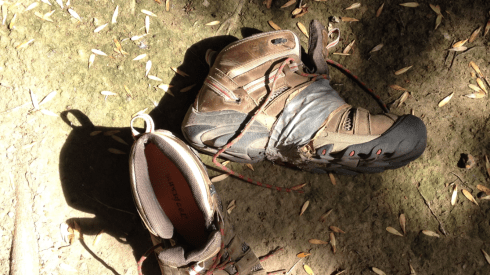
Busted Boots

Dear Will:

We were over 20 miles into a 50+ mile backpacking trip though the Golden Trout Wilderness in the High Sierras. With 35-40 pounds on our backs, we had completed the long, relentless slog up and over New Army Pass (12,300 feet) the day before, and somewhere on the backside of Guyot Pass (10,958 feet) my son, Seth, alerted me to a problem. My boot was coming apart.

I stared in disbelief. Clearly, the sole was detaching itself from the body of the boot, which seemed, upon reflection, sub-optimal to my purpose. I had come to climb Mt. Whitney—at 14,505 feet the highest peak in the contiguous United States—and the thought of doing so with half a left boot was untenable. As we tromped on, I kept rechecking the evidence (the way we do), as if on the fifth or eighth or tenth look I might discover that the previous nine had been an illusion. But a couple of dozen rechecks changed nothing. My foot was kaput.

When we set up camp in Upper Crabtree Meadow that evening, I considered my options, but not for long. The next day was Whitney, an all-day, 15-mile roundtrip requiring a 4,000-foot ascent, after which we would still be over 20 miles and three more mountain passes away from the trailhead. The manifest virtues of duct tape and hope (in that order) notwithstanding, the moment for prudence had clearly arrived. I tried to imagine it: Local Hiker Bags Whitney But Loses His Sole. With the welfare and safety of others directly affected by my actions, I just couldn’t take that chance.

There were 19 of us in total, six adults in various stages of middle-aged “fitness” along with 13 boys from 14 to 18 years old. I was by no means the leader of this expedition (outdoor competence being a necessary prerequisite), but I did feel responsible in a kind of paternal, ecclesiastical sense. And then of course there was Seth. Ten years ago I climbed Whitney with my oldest son, Luke, and while I can’t say that I relished the anticipation of the lung-shrinking climb to the summit, I did look forward to that trophy-shot of the two of us, hands on one another’s shoulders, the Sierra mountains stretching out behind us like a giant’s gnarled molars and bicuspids. Alas, it was not to be.

So the next morning the others began their climb to glory while I stayed behind supervising our campsite. I paced. I fidgeted. I fidgeted and paced. Anxiousness turned to worry as I tried to imagine my little group of intrepid alpinists. I knew, for example, that there are lightning showers every afternoon on Whitney, and if you don’t get off of the summit in time you may unwittingly become a Ben Franklin experiment. So you can imagine my state of mind as the hours passed and the afternoon rains came and my climbers were nowhere in sight. I quickly stowed our gear inside the tents, and then, with no other recourse available, I stowed myself inside as well, feeling helpless and useless as I imagined how I might report my experience later. (“How was your trip?” “In tents.”)

Seven hours. Eight hours. Nine hours passed. I lay in my tent, listening to the steady thrump of rain and praying for the safe return of my companions. Of my son. Finally, ten hours after their departure I heard the first voices. They straggled into camp, bedraggled and exhausted. Finally, over 11 hours after their 7am departure, the last of our group stumbled into camp.  I felt a surge of emotion that surprised me. We were safe. Together. At last.

I do not wish to overstate the significance of this experience for me. But I can tell you truthfully that what I felt that afternoon is not that different from the longing for togetherness—for homecoming—that I feel for you and every other member of the Santiago Creek Ward. I wait. Hoping to hear your voice. Praying for your safe return.

PW