We Love Those Who Love Those We Love

Dear Will:

A couple of weeks ago Dana and I were in Logan, Utah, seated in a well-appointed lecture hall on the campus of Utah State University, there to hear Bryn defend her Master’s thesis: “Once Our Land Is Gone, It’s Gone”: Farmer Perspectives on Growth, Embeddedness, and the Future of Food in the Great Salt Lake Basin. Scattered about the room were the folks I had expected: fellow students, advisers, various other members of the academic community—even a couple of the farmers who had been featured in her research. 

Dana and I were brought to tears as we heard Bryn’s persuasive narrative about the plight of the local growers who are too often scapegoated for the desiccation of the Great Salt Lake. As Bryn’s research demonstrated, they are passionate men and women whose love of the land and of their craft cannot be doubted, people who—in spite of the forces working against them (climate change, urban sprawl, misplaced political priorities)—continue to find ways to bring food to our tables year after year after year. Had you heard Bryn’s presentation or read her thesis, you too would have come away convinced that the farmers of the Basin deserve our respect and admiration rather than the underappreciation and even vilification that dominates the discourse around Utah’s growing water crisis.

Our emotions that day ran high—and not merely due to Bryn’s moving account. There were others in the hall that day who also moved us to tears. There in the center, about halfway back, was an unexpected quartet, three aunts and an uncle, members of an extensive (and growing) Bryn Fan Club who had driven a couple of hours each way to be there to witness Bryn’s big moment. On the Zoom link were additional members of the BFC, including another aunt, a former teacher, and one of our dearest friends whose avuncular charm has made him one of Bryn’s dear friends now as well. As we watched them watch her, we felt a great outpouring of affection for each of them. None of them are farmers, nor do they have a longstanding interest in the agriculture of the Great Salt Lake Basin. Yet there they were because they love Bryn—and Dana and I felt it deep down. That day we were reminded of something we have noted over and over throughout the years as others have taken interest in our children: We love those who love those we love. 

The week prior, in a totally different place for a totally different reason, we felt similar pangs of tenderness and appreciation. We had gathered in a local park to celebrate our granddaughter’s second birthday. But for a couple of other toddlers, the only other non-grandparents at the party were friends of my son Luke and his wife: delightful, irresistible thirty-somethings who had gathered outside a small zoo on a Saturday afternoon to show love and support to three of the people we love most in the universe. Our granddaughter will remember nothing from that day, but the image of Luke’s friends, doting on my favorite little two-year-old, fills me with wonder and gratitude I cannot fully express.

These emotions were swirling in my breast this past week as I hiked one of our local trails. Along my trek I passed a man who kept calling out: “Kylie girl! Who’s a good girl? Kylie!” He explained that some friends had lost their dog in the area and that he was spending his Saturday trying to reunite them. Immediately I found myself loving both the man and the dog and hoping that by some means I might find Kylie myself.

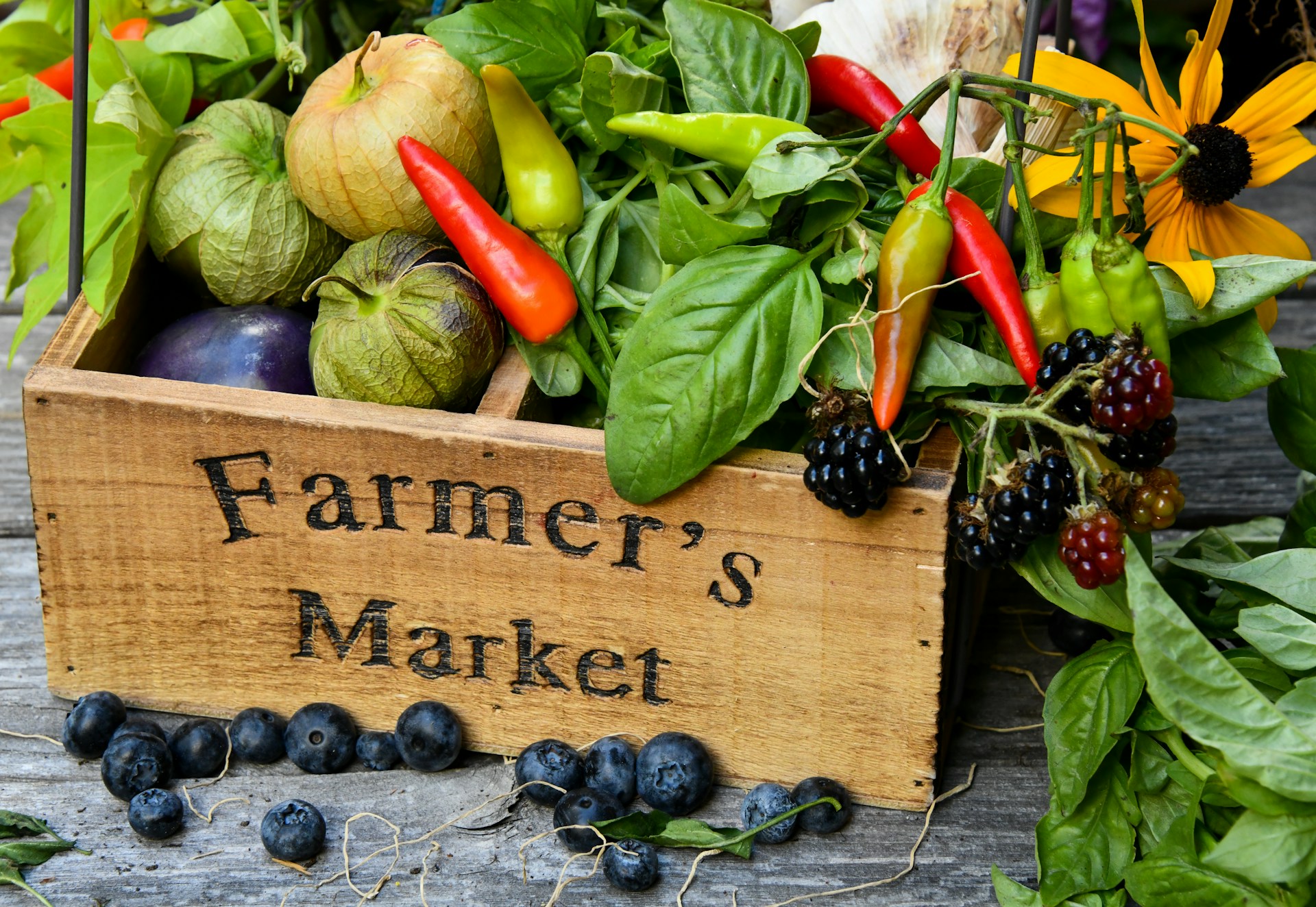
That’s how this stuff works: Love is infectious in all the right ways. Aunts love nieces; parents love aunts; friends love friends and their dogs, and somehow strangers end up loving them too. So when your daughter loves farmers, there’s only one thing to do: You cut your hike short and give in to her longstanding admonition to support the local farmers’ market. The berries, avocados, carrots, and cucumbers you purchase there will almost be beside the point. You go there to bear witness and give thanks. To acknowledge labor and craft and caring, to honor and respect. And in your own small way to express your love for those she loves as well.

PW

P.S. They found Kylie. Don’t you just love that?

Photo by Shelley Pauls on Unsplash

The Children Are Watching

Dear Will:

For as long as I can remember, my dad was a member of the Rotary Club. He went to meetings and on the occasional trip, but mostly I had no idea what it meant to be a Rotarian except for a sign that hung on the wall of his office listing the organization’s Four-Way Test. To this day every Rotary Club around the world recites it like a catechism:

Of the things we think, say or do

  • Is it the TRUTH?
  • Is it FAIR to all concerned?
  • Will it build GOODWILL and BETTER FRIENDSHIPS?
  • Will it be BENEFICIAL to all concerned?

You didn’t have to see that sign on his wall to know my dad was an honorable man. It showed up in everything he did and was reflected in the respect he commanded both in business and in his private life. He didn’t talk much about his affiliation with the Rotary Club, but if you knew him and later learned he was a Rotarian, you would not have been surprised.

My dad’s sense of honor showed up all the time. I remember once all nine of us had piled back into the family station wagon following dinner at a Chinese restaurant. Somehow my dad realized that he had not been charged the full amount for our meal or he had received too much change or something like that. Well, he left us all in the car and marched back into the restaurant to settle his account properly. I was amazed. We had already left. No one would ever know. But for my dad, these things mattered. 

Tad R. Callister has said: “Integrity is a purity of mind and heart that knows no deception, no excuses, no rationalization, nor any coloring of the facts. It is an absolute honesty with one’s self, with God, and with our fellowman. Even if God blinked or looked the other way for a moment, it would be choosing the right—not merely because God desires it but because our character demands it.”

Throughout the ages, our most admired leaders have been men and women similarly committed to a life of virtue. George Washington famously walked away from the presidency when fawning admirers were anxious to install him as king. He chose instead (and once again) to put the interests of his country ahead of his own. (No wonder we all found it so easy to believe the apocryphal story of young George and the cherry tree.) Of Washington, Thomas Jefferson once wrote: “His integrity was pure, his justice the most inflexible I have ever known. . . . He was, indeed, in every sense of the words, a wise, a good, and a great man.”

Nor should we forget that our greatest president of all, Abraham Lincoln, has always been known as Honest Abe—a remarkable honorific, especially considering how little evidence of honesty remains in political circles today. The Lincoln Heritage Museum has called Lincoln “an exemplar and a model of virtue perhaps more than any person in world history other than religious figures.”

It is in no small part due to the character of such men and women that the United States has risen to greatness from its humble beginnings. Like any nation ours has an imperfect past, of course, but if we have ever been great and ever hope to be so again, it has been and will be due to those moments when we have stood tall and done the right thing, even in difficult circumstances. When we have put the broad interests of the many ahead of the selfish interests of the few. When we have made sacrifices for humanity and given of our riches and resources to lift those less fortunate.

This is who we are—or who we were, in any case. And who we should be. So let us not be too casual nor too forgiving as we watch those now in power openly violate their solemn oaths of office; as they act to do away with those appointed to enforce ethical standards and flag conflicts of interest within the government; as they instruct others to ignore laws against bribery. As they disregard commitments, betray friendships and alliances, cozy up to the sorts of strongmen and dictators that for years we have fought to constrain and overcome. Nor should we make excuses for behavior and policies that our forebears found abhorrent and worked so hard to eliminate in the United States of America.

I’m not saying we should elect only Rotarians; but it seems obvious to me that we should not lend our support to those whose lives make it clear that they could never get in the club. In any case, before we drive away, we must all remember that there are children in the backseat watching what we do next.

PW

Photo by Clay Banks on Unsplash

I’m Pretty Sure I’m Psychic. Or At Least I Hope So.

clairvoyant-historical-pic-shutterstock_1024

Dear Will:

Years ago, in the midst of a long, mind-numbing road trip with the family, I introduced my kids to a game that had not existed five minutes prior. Making it up as I went, I outlined the rules: I announce a category of my own choosing—let’s say “Animals.” Then I silently select a specific item from that category and try to tell you what I’m thinking without saying a thing—no gestures, no other clues of any kind. “I must communicate to you solely through the sheer force of my prodigious, telepathic powers,” I told them. “Even now I am sending forth psychic emanations! I am devoting all available synapses to this one thing! Divine it, and we shall have achieved . . . PSYCHIC WONDER!”

In case you didn’t recognize it, this is fun. Or as my wife, Dana, might put it: insufferable. (Which, just between you and me, is what actually makes it fun. Don’t tell her I said so.) Nevertheless, in spite of its manifest stupidity, it was the ridiculousness of Psychic Wonder that made it for me somewhat irresistible in moments when I was feeling silly or when I saw an opportunity to embarrass my children (also fun). Thus I frequently subjected a backseat full of carpoolers to Psychic Wonder on the way to school. Alas, the game never really lasted very long—for some reason I never found anyone as good at it as I was.

Over the years, I introduced my children to a number of these not-quite-games, invented on the fly and precisely honed in the carpool laboratory. Sometimes we “played” Factoids or Poetry Hour or a thing I called Life Is Like, in which one person would begin a simile and everyone else would have to try to Forrest-Gump a suitable ending. (Go ahead. Give it a try: “Life is like a box of Hamburger Helper. . . .” FUN!) Or here’s another one that Dana “loves”: Shamu or Celery. I choose a random something-or-other (nose hairs!) and then we debate whether that something-or-other is more like Shamu or more like celery. (The correct answer, in this case, is celery. Obviously.) That game just might be Dana’s all-time favorite, as you can imagine.

I ask you: What’s a better way to fill the 15 minutes between home and La Veta Elementary? Throw into the background some not-so-classic rock from decades prior and you’ll be pulling up into the drop-off zone in no time. Not only will you have amused and delighted approximately one person in the car, but the kids will be pushing and shoving, climbing over each other to get out the door and onto the curb, looking at your son as if to say, “Luke: What’s with your dad?”

I miss those mornings, winding through the streets of Orange with a Mazda full of braces and nervous energy. Sadly, my carpool days long ago receded into my rearview mirror. Luke, now all grown up, married and established, drives himself to work each day; Bryn, committed to doing what she can to save the planet, prefers a bike or public transit as she completes her degree; and Seth, working as a missionary in Salto de Guairá, Paraguay, has little choice but to walk everyplace he goes. I now find myself commuting in an empty car, inching along the 405 freeway, alone with my thoughts, hoping that somehow, way back when, somewhere between the garage and the crossing-guard, my kids got the message embedded within that early-morning nonsense, conveyed to them by something more heartfelt than psychic emanations. Conveyed to them even now, as I write this and hope that in this moment they can divine what I’m thinking, no matter how far away they may be.

So that maybe the next time someone asks “What’s with your dad?,” they’ll immediately know the answer, and they’ll feel it—deep down. PSYCHIC WONDER!

PW