Dear Will:
Several years ago, I was down at the church for an evening of pick-up basketball with the guys. That the guys in this case were all quicker, more talented, and 15 or 20 years younger than I hardly mattered. Except on this night. On one play in particular, an opponent took the ball and accelerated toward the basket. Years of experience told me just what to do: slide laterally to block his path and force him away from the hoop. I could see it all unfold in my mind. Unfortunately, my age and lack of fitness betrayed me. I was way too slow to react, so rather than cut him off chest-to-chest, I only managed to stick out one leg and send him sprawling.
He was appropriately irate. I could have easily broken his leg or triggered a torn ACL. Had we been playing soccer, I’d have been sent off with a red card for dangerous play. The game continued, but soon thereafter I found myself losing my footing, knocked to the ground in the middle of the key while the others battled for a rebound. I don’t know how everyone managed to avoid stomping on me. Once again my physical limitations had become a serious threat to ankles and knees, and I was forced to confront a bitter reality. It was clear that I no longer belonged out on that court with those guys. My days of basketball with the fellas on Thursday nights had reached a discouraging, humiliating end. At the next dead ball, I subbed myself off the court and have not returned.
As I said, that was several years ago. Since then I have turned to other activities to try to stay somewhat fit and active. Hiking and running are not nearly as satisfying as a good game of hoops, but they have become my go-to alternatives. I’ve come to really enjoy them, and I figure they are easy, low-risk activities I can do at my own pace and on my own terms for many years to come.
Or so I thought. A couple of years ago I developed a pretty bad case of sciatica that sent me hobbling to an orthopedist for relief. After an x-ray and an MRI, the ortho offered his assessment that, due to a couple of compressed disks in my back, I was going to have to stop running and hiking. To which I thought: “Yeah, well that’s not gonna happen.” With the help of some anti-inflammatories and a steroidal injection, within a few weeks I was feeling good as new, and before long I was back running my morning 5K and hiking weekends as before. In time I stopped thinking about my compressed spine altogether.
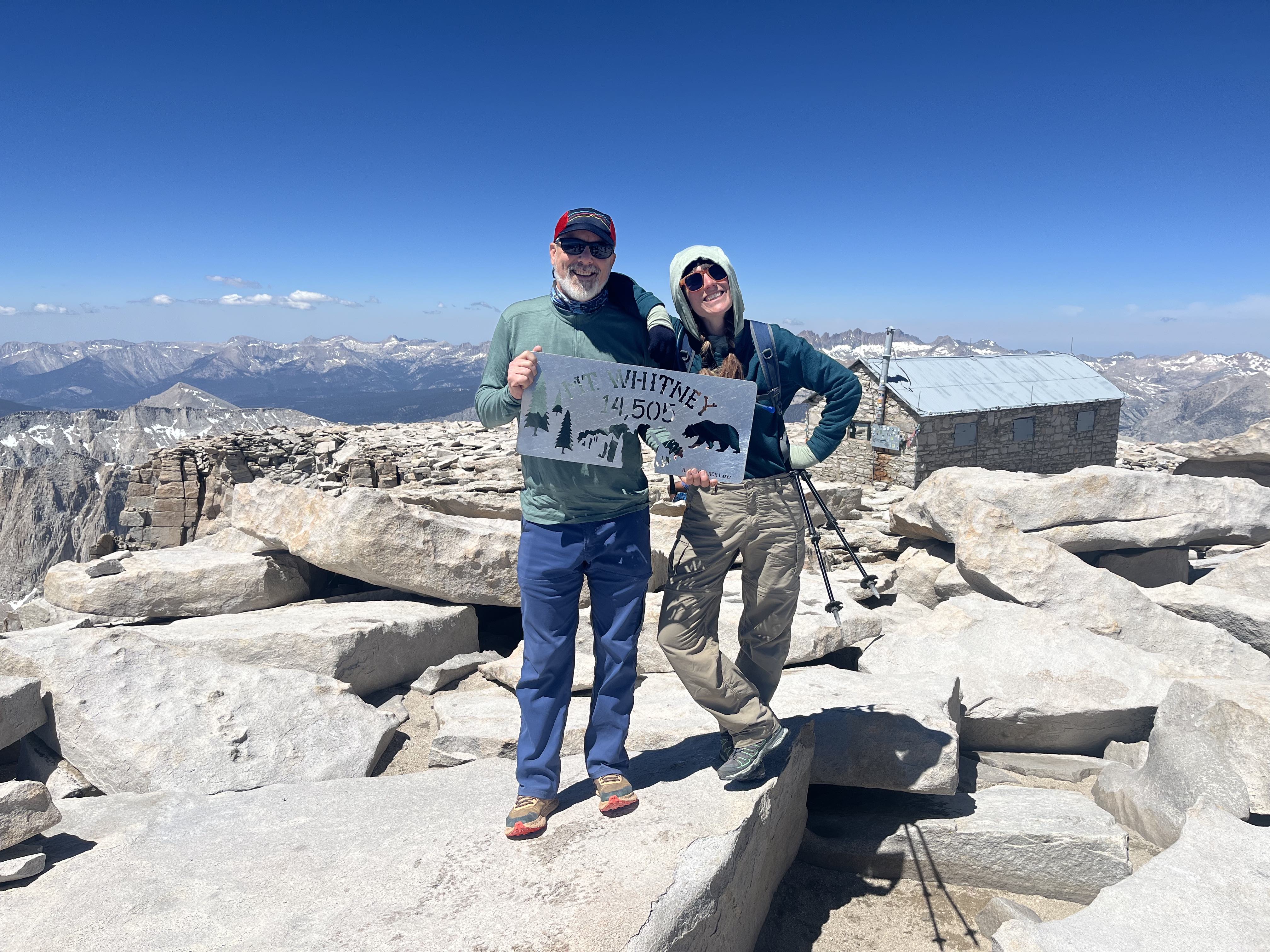
When the sciatica issue returned this spring, I was relatively unconcerned. I returned to the orthopedist, got the steroids again (along with the same concerned counsel about my personal choices), and a couple of weeks later I felt good enough to complete a 65-mile backpacking trip through the Sierras with my daughter. Throughout that week-long adventure, I felt GREAT. No stiffness, no muscle soreness, no nerve pain of any kind. It was exhausting, and I was pretty slow compared to all the 20-somethings I shared the trail with, but it was a fantastic culmination of my 65th year on earth. Plus I felt like I had proved that I could live with a couple of bulging disks and make it work.
That is, until I couldn’t. Four days after Bryn and I returned from Mt. Whitney, I went for a slow morning run, and that afternoon I knew I was in trouble. The sciatica problem returned worse than before—worse than ever by a wide margin. Another round of steroids have helped—some—but the numbness in my quad and the pain up and down my left leg have not gone away. I’m hoping that patience, stretching, and physical therapy will make a difference, but my optimism is now tempered by a growing sense of reality. It’s as if I find myself sprawled once again in the middle of the court, unenthusiastically pondering my reduced set of options.
So it goes as our bodies age. As a rule, our warranties run out early and before long the wear and tear really starts to show. But since we don’t have the option of trading in our rusted old jalopies on brand-new, late-model originals, we have no alternative but to patch them up and find a way to keep moving down the highway. It’s that aspect of mortality that no doubt compelled prophets to encourage us to “endure to the end.” (That’s why they’re called prophets: They can see what’s coming.) They do offer some reassurance from time to time (“thine afflictions shall be but for a small moment” and all that), but when your spine has gone kaput, there’s not a lot of solace in that.
In any case, I’m determined to make the best of it rather than just settle into the Barcalounger and call it good. I like the idea of staying fit and active for many years to come. There are many adventures that still await me, stunning places to see. With retirement not too far off, there are a lot of things I still want to DO—even if it means finding a way to do those things while placing less stress on my back, unpleasant though that may seem.
So I guess what I’m saying is: Tai chi, anyone?
PW
 Letters to Will