Dear Will:
I’m prepping for another backpacking trip with my daughter, and as I always do I have pulled out a shake-down list I solicited years ago from my friend Warren, who is singularly responsible for my willingness to attempt these crazy adventures in the first place. The checklist is full of the obvious and not-so-obvious (which is why I mooched it to begin with). But there at the top—before he gets to mole skin and duct tape and paracord—Warren includes the following note: “Just remember the lesson we learned: No more than one pass a day!”
Ah yes, that fateful day coming back from Mt. Whitney when we decided to go over Guyot Pass (10,900 feet), down to Rock Creek (9,820), and then to the meadow (11,060) midway to Cottonwood Pass where we expected to set up our tents for the night. As we approached the meadow, everyone in our group agreed that we could go no further. We counted our steps, wondering how much trail remained. Time dragged. So did our feet. At last we reached the open pasture, gassed and parched and ready to flop down in exhaustion. That is, until we were informed that the springs at the meadow had all run dry. The nearest water, in fact, was another four miles up the trail at Chicken Spring Lake.
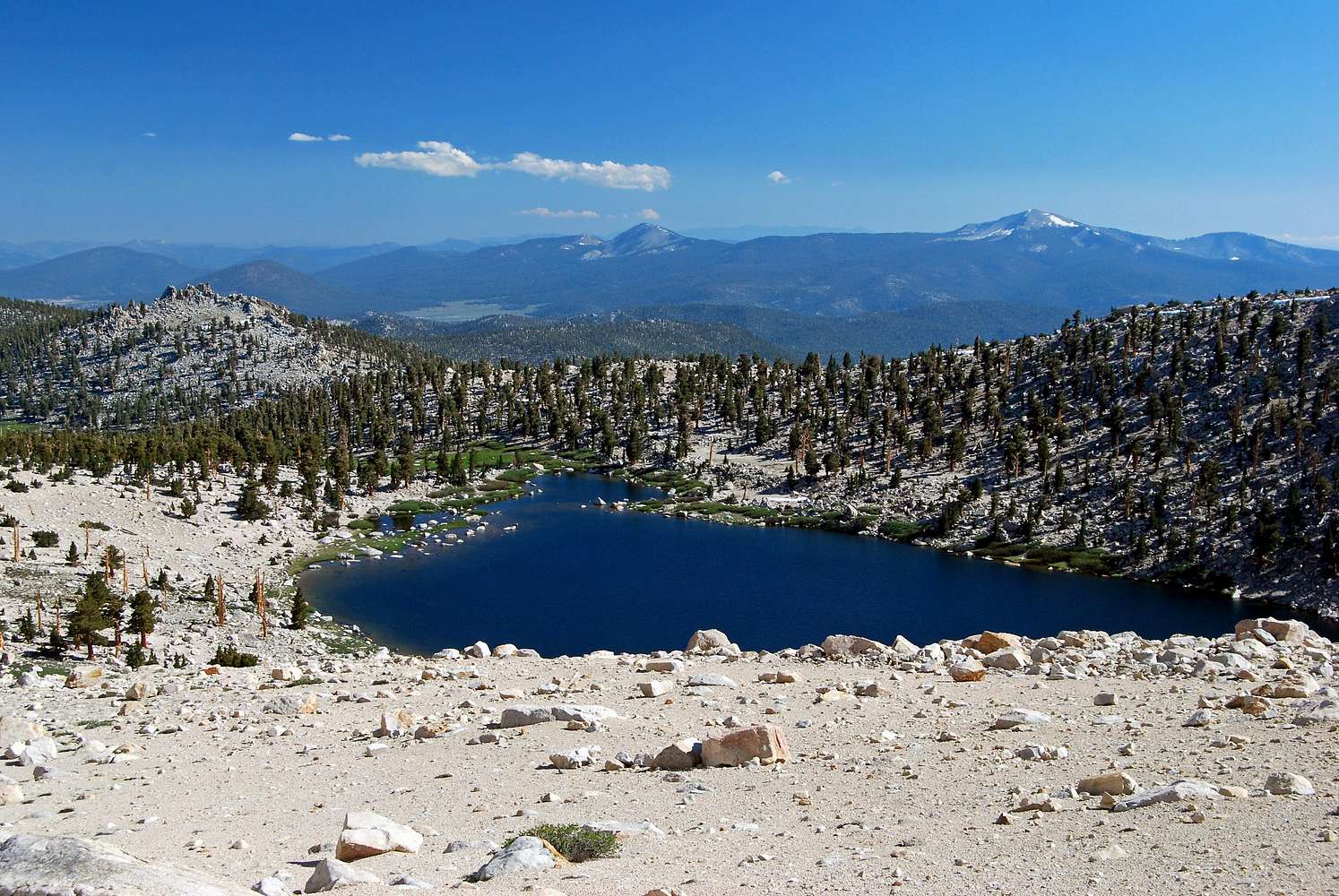
What a punch in the empty gut. Yet there was nothing to be done but moan, hoist our packs, and begin again. We had already determined that we could go no further . . . until we had to. Dehydrated and calorie-starved, we somehow made our way to Chicken Spring Lake after dark, and by the light of our headlamps we filtered our water, cooked our food, set up our tents, and collapsed into our sleeping bags, swearing (as previously noted) to never do that again.
Perhaps you’ve been there yourself. Not at Chicken Spring Lake, per se, but metaphorically for sure—someplace near the point where you are certain you can do no more. Maybe in the midst of an overbooked, hyper-stressful schedule one of your children lets you know that her marriage is starting to fray. Or you have one of those phone calls with an aging parent that makes it clear that he is really starting to slip. Maybe you get hit with one of those unexpected expenses that you have no way of paying. Meanwhile, you still have to do the everydays: make the meals, help with the homework, fix the broken sprinkler, prepare to teach your Sunday School class. Everywhere you turn you are expected to do more, give more, be more, and at some point you feel that you no longer have it in you.
And right about then, when you feel you have given all you have and even a bit more, at church they ask you to take on a new assignment, or you get laid off at work, or your closest friend comes to you in tears asking you to lift her burden. And it’s all so overwhelming that just about all you can manage is that popular, one-word prayer: “HELP!”
And yet somehow, in that moment, you find a way. You know just what to say to your troubled friend. Perhaps you remember a verse of scripture, and although you don’t know where it is or exactly how it goes it is nonetheless just the right thing for her at just the right time. In that instant you find “strength beyond your own” to enable you to go one more day, or one more hour, or one more step, and maybe carry someone else with you as you go.
At times like this, I often think of the poor widow who lived with her son in the town of Zarapheth. She faced poverty made worse by drought which led to famine. She had done all she could to care for her son, but when the food finally ran out, so did her hope. Knowing she had just enough meal in the barrel and oil in the cruse to make one last cake for her and her son, she headed out one sad morning to gather sticks to build a fire to cook what she believed would be their last supper. She had done all she could and had nothing left to give.
But then—of course—she was asked to do one thing more. A stranger stopped and asked her to fetch him some water and bread. When she explained her tragic circumstances, he gave a stupefying response. “Make me first a cake,” he said, “and then make a cake for you and your son. Do this and the meal in your barrel and oil in your cruse will never run out.” Which she did. And the stranger, Elijah the prophet, made good on the miraculous promise.
When asked to do something especially hard, this widow did so in faith, and God blessed her for it. I love this story because I see in it a promise to us as well: That if we can hold onto our faith in the midst of difficult times—rather than curse God for our misfortune—perhaps we may lay up in store for a future moment in which all we have to give is still not enough. My faith and personal experience tell me that such efforts invite compensatory blessings that will be made available when we need them most.
It won’t be because we have lived such good lives that somehow we have earned it—not strictly anyway. But it may be a merciful nod toward our faithful efforts to give “such as we had” at some point in the past. And because of our faith and our willingness to do hard things when things got hard, it will be as if we reached into our empty barrel and found yet another handful of grain. We will tip our empty cruse and somehow oil will once again come trickling out. And when that miracle happens—and it will—we will feel the love of God, perhaps like we never have before. We will know that He sees us, He knows us, He loves us, and He has once again fulfilled His promise that we will never walk alone.
I don’t know exactly how this works. But it does. And it always will.
PW
P.S. Bryn and I will be hiking past Chicken Spring Lake on Tuesday. I’m thinking perhaps we should stop for water.
Photo by Pilz8 on SummitPost.org
 Letters to Will