The Big Picture Requires Lots of Dots

Dear Will:

The world is kind of a mess. Perhaps you’ve noticed. Public discourse has never been more vile, with so-called leaders modeling and encouraging the basest human behavior. The weather report seems to feature one cataclysm after the other, with record-setting heat in one place challenged by record-setting cold in another only to be interrupted by yet another Storm of the Century. The war in Ukraine seems unsolvable, but it’s easy to forget it’s even happening given the growing, unsolvable conflict in the Middle East. Meanwhile, the Central Valley of California is sinking, the Great Salt Lake is drying up, and day after day we pull more water out than nature can put back in. I could go on. And on.

As I watch what’s happening it’s tempting to just throw up my hands and give up altogether. It seems like my best option might be to just hope—somehow—to survive the coming Apocalypse and hang on until the Second Coming, when Jesus will return to make things right again. (You know: “paradisiacal glory” and all that.) But as a “What Would Jesus Do?” sort of guy, I know in my heart that waiting around for someone else to solve the problem is not exactly the Jesus Way.

The other day I was reading my Bible (like you do) and the Jesus Way just leapt out of the Book of Matthew and kicked me right in the diaphragm. You remember from Sunday School the Parable of the Talents—that simple allegory about responsibility, effort, and expectations?  Jesus told of a rich man who traveled to a far country, leaving some of his fortune in the care of three servants, giving “to every man according to his several ability.” When finally he returned from his journey, the wealthy lord called his servants to give an account of what had taken place in his absence. Two “good and faithful” servants did wisely, investing what had been placed in their charge and returning to their boss double what they started with. The third servant, he who had been given least, was not so wise. He basically did nothing, returning to his lord the single coin he had been given without even a modicum of interest earned in the interim. His boss was so disappointed that he called him “wicked and slothful” and threw him out on the spot. Ouch.

I reflect on that passage in the New Testament and it becomes pretty clear—to me, anyway—that Jesus would not be cool with me just sitting around waiting for the world to implode so he can come clean up the mess. At the same time, I can sense that He doesn’t have huge, unreasonable expectations—of me, or of anyone, for that matter. What He does expect is that I’ll do what I can—even if the impact of my little acts is relatively insignificant. 

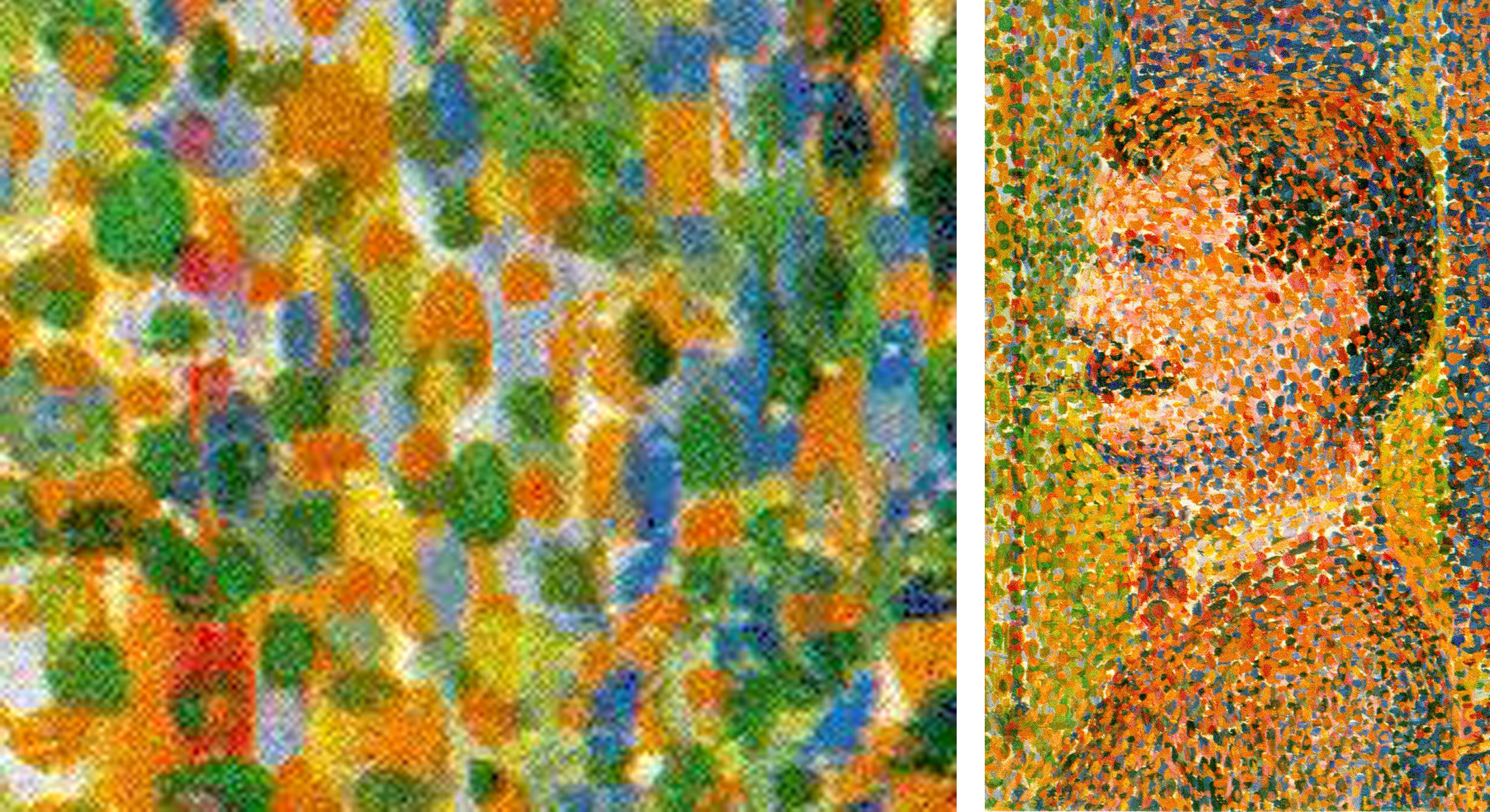
For instance: I cannot possibly reverse the effects of climate change, but I certainly can try to minimize the negative impact of how I live my life. That much I can do. I can’t bring peace to Gaza, but I can choose not to turn the next School Board meeting into some kind of warzone. And while I certainly can’t refill the Great Salt Lake or restore the Central Valley aquifer, as a homeowner I can at least stop watering the sidewalk (my sprinklers are blasting at full-spray even as I write this). And maybe—someday when I am ready—I might consider replacing my beautiful green lawn with something less thirsty. Every little bit helps, and lots of little bits help a lot. By small and simple things are great things brought to pass, as the saying goes. And even if my small and simple contributions are little more than a single violet dot within a massive pointillist landscape, in the big picture I will have made my contribution.

What about you? Perhaps you can do much more than I—perhaps much less—but everyone according to their several ability, as Jesus said. What do you touch? What can you say or do to lift others and make an impact for good? What can you influence to improve our community, to counteract the negative with something wonderful? I might ask the same thing of any student, mother, farmer, or legislator who is part of that community: Think about how you use land and resources, how you interact with those you disagree with. Think about what you prioritize, about how you cast your votes. Ask yourself if there isn’t something small that you could do to make your own small difference. Or something truly grand and consequential, for that matter. Regardless of your circumstances and your sphere of influence, doing the same old thing—whatever that might be—is probably not the best choice available.

Like you, I yearn for a better tomorrow. In the face of the many challenges before us, by all means we should continue to hope and pray for some divine intervention; but after all the hoping and praying, we have to get up and do something. That is the Jesus Way. None of us should be asked to run faster than we have strength, but at the same time it’s not too much to ask each of us to pick up the pace a little, to find ways each day to make our own corner of the world just a bit better—that is, before Jesus comes back to ask us what we did with what we have been given. 

PW

Image: Detail from Georges Seurat’s La Parade de Cirque courtesy of Principle Gallery
Sorry. Must Have Nodded Off. What Were We Talking About?

Dear Will:

The changing calendar has forced me to confront the fact that I haven’t written in a while. I’m so sorry. It seems 2023 sort of got away from me. I’m not sure “laziness” qualifies as an excuse, but it certainly makes for an excellent explanation. 

You could also blame old age, I suppose, inasmuch as there is so much evidence around here that Dana and I are not as young as we once were. Consider:

20 Ways We Can Tell We’re Getting Old(er)

  1. For the past decade-plus, roughly 30% of what we pull from our mailbox is from the AARP.
  2. We finally lived long enough to pay off our mortgage.
  3. The Red Cross will no longer accept our blood donations. They have standards, apparently.
  4. Between the two of us, each day we swallow roughly 29 pills and supplements, none of which seems to make any difference whatsoever.
  5. One of us is always cold. (Scratch that: This has been true for the full 37 years of our marriage.)
  6. Speaking of which: We have been married for 37 years. Pretty sure.
  7. All three of our children have moved out, graduated from college, and started their careers, except for the one who graduated and moved back home, and the other one who has recently returned to school. 
  8. At last count, 50% of our original hips and knees have been replaced. (Note: One of us still has all of his original equipment.)
  9. We legit could be collecting Social Security right now if we wanted to.
  10. If we can get the technology to work, approximately 98% of the time we are the oldest participants on any given Zoom call.
  11. Our children have started having children. (We have a granddaughter!!)
  12. We keep a different pair of reading glasses in every room of the house. Somewhere.
  13. Two words: Ear hairs.
  14. We are struggling to keep up with Dana’s 96-year-old father.
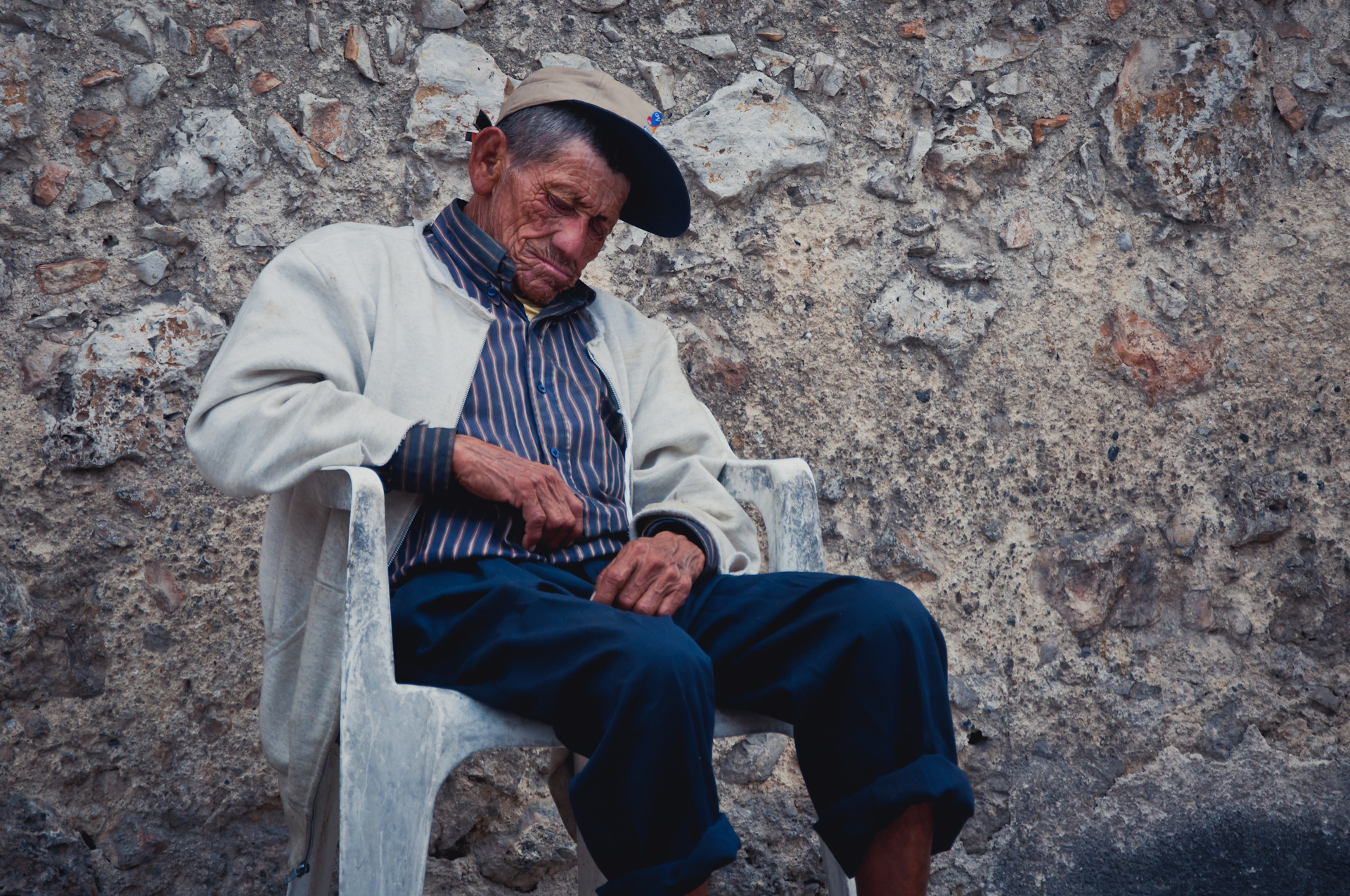
  15. Sorry. Must have nodded off. What were we talking about?
  16. Recently we have found ourselves repeatedly using the word sciatica
  17. We spend zero minutes per week on TikTok and never feel left out.
  18. Sometimes we remember stuff. And sometimes the stuff we remember is from a long, long time ago.
  19. People observe us carefully and then cautiously inquire when we are planning to retire.
  20. We’re not dead. Not yet, anyway.

But even so, life is pretty good around here. We keep waking up in the morning, working out and walking the dog like people do. They haven’t yet asked me to stop showing up at the office, and the checks keep clearing, which I always take as a good sign. The roof doesn’t leak, and when we open the fridge there is always food inside, which the kids still come over to eat from time to time. We’ve been blessed, is what I’m saying. Even if I forget or don’t quite get around to writing to you every month. 

I’ve promised to do better in 2024. But chances are that in a couple of months you’ll have to remind me that I made that promise. You know how it is with old guys like me.

PW

Photo by Hendrik Terbeck

By This Shall Everyone Know

Dear Will:

There once was a man traveling the 15-mile stretch from Jerusalem to Jericho, heading to some other destination beyond. He brought along his donkey, perhaps because it was too far to walk, perhaps because he had too much to carry. Probably both. At some point, he came upon a stranger who had been beaten and bloodied by robbers—mercilessly left for dead on the side of the road. Filled with compassion, the traveler rushed to this stranger’s aid, taking oil and wine from his personal provisions to tend to his open wounds. Who knows which item of his own clothing the traveler was forced to tear up to fashion makeshift bandages?

Having slowed the bleeding and done the best he could with whatever other injuries he found, the traveler was forced to make a decision: What should he do with the suffering stranger? Surely he couldn’t leave him at the roadside. So he did the hard thing, lifting the bloodied man onto the back of the donkey and continuing his journey on foot—perhaps even carrying whatever supplies he had removed from the back of the beast in order to make room for the injured victim.

No doubt hours behind schedule, the traveler eventually stopped for the night at a roadside inn, where he paid for the stranger’s accommodations as well. The next morning, before continuing on his journey, he left additional money with the innkeeper along with these instructions: Please nurse this man back to health, and if your expenses exceed what I have paid you, I will reimburse you when I come back through this way.

Jesus taught this parable about the kindly Samaritan and the unfortunate Jew to help us understand what love looks like. If he told it today, it might be about a Muslim and an Evangelical Christian, a Democrat and a Republican, a Palestinian and an Israeli. It is a story about compassion, about bearing the burdens of others, about inconvenience, interruption, generosity. It illustrates what we mean by “the pure love of Christ.”

Elsewhere in scripture we find other detailed descriptions of what love looks like. On another occasion, Jesus said that love is feeding the hungry, giving shelter to strangers, clothing the naked, visiting the sick, reaching out to those who are in prison. It’s treating the poor, the homeless, refugees and other victims of misfortune as you would treat Him—as if He and they were essentially the same person.

In Paul’s well-known letter to the Corinthians, he said love is patience, kindness, and celebrating the success of others. It’s humility and respect. It’s looking out for those around you and always giving them the benefit of the doubt. It’s celebrating truth. It’s tolerating, believing, and hoping, enduring whatever might come your way.

I’ve known many people who have shown me what this sort of love looks like. Through their selfless generosity of spirit, they have come to embody for me a real-life ideal of what I’m striving to become. I return to their stories again and again, perhaps as an antidote to the hate and unkindness that seems to dominate public discourse. Their examples lift and inspire me, urge me to try to be better myself.

In all of this I hear again an essential message and mandate directed to all of us who say that we are “trying to be like Jesus.” Because of love, you should be able to spot His true followers anywhere people gather: at the park, in the grocery store, at a school board meeting, at a football game—even on social media. In fact, you should not have to look very hard. Jesus gave us a simple way to spot the true believers: “By this shall all men know ye are my disciples, if ye have love one to another” (John 13:35).

Go, and do thou likewise.

PW

Image: Ferdinand Hodler, The Good Samaritan (1875)