The Laborers in the Vineyard

Dear Will:

Earlier this month the Church held its semi-annual General Conference. It was a wonderful weekend of thoughtful gospel commentary and faith-building. I hope you had a chance to watch some of it, or perhaps you went online and read some of the discourses. But in case you missed it, I’d like to share with you one talk in particular. It was given by Jeffrey R. Holland of the Quorum of the Twelve Apostles during the Saturday afternoon session of the conference. I do not ordinarily send you something this long, but in this case I feel impressed to do so. I hope you’ll read it—or better yet, you can watch it for yourself.

PW

That’s It?

Dear Will:

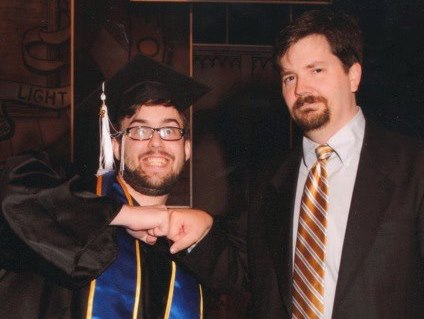
A little over a week ago my firstborn, Luke, graduated cum laude from UCLA with a degree in Communications (Mass Communications, to be precise, with a specialization in Computing and a minor in Human Complex Systems—whatever that is). He had originally planned to go to law school after graduating, but in December it occurred to him that he was much more interested in studying law than in practicing it. So in January he began to look for his first real job.

So far, he has had a few nibbles but no job offers. Because he is bright and inquisitive, well-read and articulate (and highly motivated), I’m confident that he will find work in due course. But now that he has moved back home, he and I are both feeling anxious for him to find work, settle into a place of his own, and get on with life.

When I picked him up from Westwood last week, he told me that he was feeling more than a bit disappointed with the experience of graduating from college—like the whole thing was a bit anti-climactic. “I’ve been pointing to this moment my entire life,” he told me. “Before UCLA, it was all about taking the right classes and getting the grades necessary to get into a good school so that I could get a degree from a respected university. Now that that has happened, I find myself thinking: ‘That’s it? I went through all of that trouble just so that I could move back home and be unemployed?’”

In his current state of mind, Luke is having trouble seeing the bigger picture. He can’t see far enough down the road to appreciate what he has learned or what he has become as a consequence of his 16 years of education. He is not yet old enough or wise enough to recognize his good fortune or his exceptional preparation, to see how the last four years have helped position him to become a meaningful contributor to society. Having traveled that road before him, and knowing as I do many who have been neither so fortunate nor so bright, I know much better than he could that the road ahead for him will be brightly lit and lined with promising opportunities. Luke is disappointed primarily because he still has no real sense of what happens next.

Do you ever wonder if, when you reach the end of your life on earth, you’ll find yourself thinking: “That’s it?” Do you imagine that all of the hard work and trial you may pass through between birth and death will prove to be little more than that—a long slog culminating in a huge disappointment? Do you wonder if the difficulties of mortality will prove to be worth it?

It’s easy to get so caught up in what makes life hard that we don’t fully appreciate the ways in which our mortal existence prepares us for something much greater. Like Luke, we have trouble seeing far enough down the road that we can put this life into its proper eternal perspective. But as Thoreau said: “There is more day to dawn. The sun is but a Morningstar.” It was Isaiah who first penned these words made more familiar by the apostle Paul: “Eye hath not seen, nor ear heard, neither have entered into the heart of man, the things which God hath prepared for them that love him” (1 Corinthians 2:9). The trick, of course, is to move forward with faith, knowing that God’s promises are always—always—sure.

In the short term, my task is to keep Luke believing in the near future, to help him believe in himself and in his preparation sufficiently to convince an employer to believe in him as well. In a few short months, I’m sure his outlook will be brighter. But until then, he still needs a job. Which reminds me: You don’t happen to know anyone who would like to hire a recent college grad who is bright and inquisitive, well-read and articulate, do you?

PW

Six Basic Principles

Dear Will:

Sometime in the late ‘80s, the writer Robert Fulgham published an essay entitled “All I Really Need to Know I Learned in Kindergarten.” It was a remarkable little piece, down-home and introspective, filled with simple but profound counsel. Perhaps you remember it:

Share everything.

Play fair.

Don’t hit people.

Put things back where you found them.

Clean up your own mess.

Don’t take things that aren’t yours.

Say you’re sorry when you hurt somebody.

Wash your hands before you eat.

Flush.

Warm cookies and cold milk are good for you.

Live a balanced life—learn some and think some and draw and paint and sing and dance and play and work every day some.

Take a nap every afternoon.

When you go out in the world, watch out for traffic, hold hands and stick together. . . .

That essay was published long before the Internet and yet it still managed to go “viral,” as we say today. I still remember hearing it for the first time from the pulpit in the Westwood chapel in a talk given by a man named Michael Grilikhes. Imagine. It’s been over 20 years. . . .

Fulgham’s essay came to mind the other day while I was reading with my family from the third chapter of Luke, where we find the only record of what might be called the Gospel of John the Baptist. You’ll recall that John preached on the shores of the river Jordan, calling all to repent and be baptized. Like Fulgham’s, John’s counsel was profound in its simplicity (Luke 3:10-14):

10 And the people asked him, saying, What shall we do then?

11 He answereth and saith unto them, He that hath two coats, let him impart to him that hath none; and he that hath meat, let him do likewise.

12 Then came also publicans to be baptized, and said unto him, Master, what shall we do?

13 And he said unto them, Exact no more than that which is appointed you.

14 And the soldiers likewise demanded of him, saying, And what shall we do?  And he said unto them, Do violence to no man, neither accuse any falsely; and be content with your wages.

Do you sometimes feel like living the Gospel of Jesus Christ is just too hard—that there are too many commandments and precepts and expectations? I think John offers a simpler view of the same thing. Six basic principles to live by: Say you’re sorry. Share. Be fair. Don’t hurt others. Be honest. Be content.

Six basic principles. Think how the world would be different—scratch that—think how your life would be different if you and those around you adhered to those simple teachings. The thought itself is so intriguing that my family and I have decided to take up that challenge and see how it might improve our lives together.

I’m excited to give that experiment a try. Why don’t you join us?

PW