What Will They Call Our Generation?

Dear Will:

With all due respect to “The Star-Spangled Banner,” when it comes to patriotic anthems I’m all about “America the Beautiful.” I can sing either one with full-throated enthusiasm, but when they cue up “America the Beautiful” I have to brace myself, knowing that if the music director decides to go for all four verses, chances are very high that I won’t get through it all without my full-throat catching and my eyes misting over. 

Perhaps Katharine Lee Bates’ wonderful lyrics have had the same effect on you. Her tribute to pilgrims and patriots and soldiers are fitting evocations of the love of country and countrymen that lies at the heart of what has made my beloved nation remarkable—in spite of its various flaws. The third verse, in particular, always speaks to my soul: 

O beautiful for heroes proved
In liberating strife,
Who more than self their country loved
And mercy more than life!

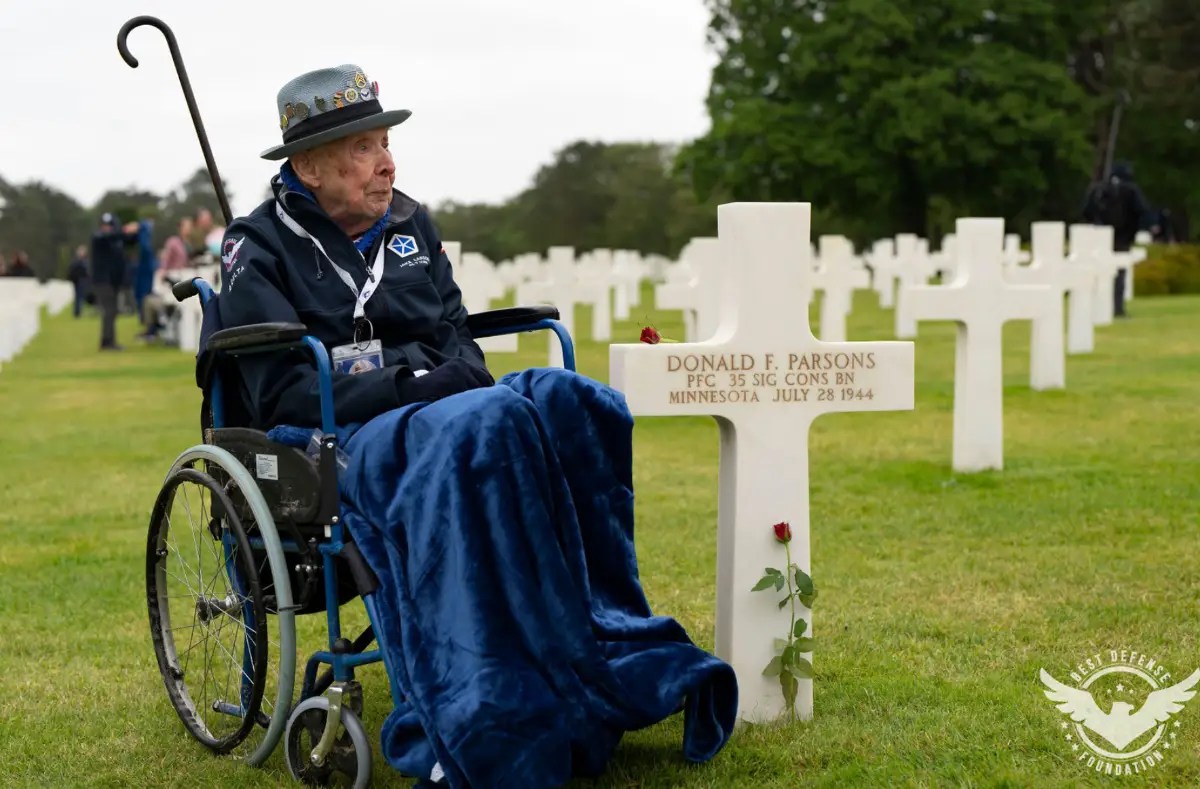
I thought of these words again in recent days while watching the 2024 Summer Olympics broadcast from Paris. NBC ran a segment focused on some of the few remaining veterans of the D-Day invasion who had returned to France to be honored while also paying honor to their many fallen friends and comrades. I felt humbled by these centenarians, now feeble and wheelchair-bound, men and women who embody a selflessness that I could never hope to match. As these aged vets looked out over the cemetery there on the cliffs of Normandy, it was plain to see why these Americans, both living and dead, have been rightly called the Greatest Generation. 

I can’t witness such a scene without feeling a deep sense of inferiority and inspiration. I find myself pondering: “What have I done? What sort of sacrifices have I ever made on behalf of others?” It leaves me with a determination to try to be better, do better, make some sort of positive difference in whatever small way I can to make my community, my country, this world a better place for others. I’ve learned to pay attention to such urges when they come because they seem to me a signal of truth, a solemn prompting to pay attention to what I’m seeing and feeling. These are more than mere nudges, I believe; they are God’s way of helping me see the gap between who I am and who I could be.

Occasionally I’m subjected to different kinds of promptings altogether, and I pay attention to them in a whole different way. From time to time I read or hear someone urging me to give in to that other side of myself that puts my selfish interests ahead of others. They will encourage me to take offense where I had not previously, to feel a sense of grievance that had not existed before. Such people would have me vilify those around me who are different, blame them for my misfortunes, call them names and treat them with disrespect and contempt. They even seem to reject the nobility of the cause that brought young men ashore on Omaha Beach and would gladly leave underdogs to fend for themselves against much larger oppressors. What I notice as I hear or read their screeds is that they would have me become a worse version of myself and, in the process, make the world around me worse than it already is. And I wonder: If this is the sort of person we choose to follow, what do you suppose the historians might call our generation?

I’m a church-going fellow, as you know, a guy who has chosen throughout my life to follow the Greatest Leader of them all, one who taught His followers to put others first: to feed the hungry, clothe the naked, visit the lonely and imprisoned. To bear the burdens of others. To answer offense and grievance with lovingkindness. I believe that the best leaders are those who similarly inspire others to strive to become better versions of themselves, who motivate their followers to pull together and achieve something they might not be capable of otherwise. Could I ever justify concurrently supporting someone who actively encourages me and others to do the opposite? It’s unthinkable. 

I acknowledge that some may see in their options ambiguity that I do not. If that includes you, may I suggest the following: As you listen to the speeches and consider both the message and the messenger, pay attention to what they are inviting you to do or to become. Then heed the advice of one prophet who taught a simple way to judge: That which invites you to do good comes from God, and that which does not, does not. 

Then choose good.

I pray along with Katharine Lee Bates that God will indeed shed His grace on America as we work together to crown our good with brotherhood from sea to shining sea. What will they call our generation? We are about to find out. 

PW

Photo: Best Defense Foundation

A Little Perspective on Life

Dear Will:

For Christmas, my son Luke bought me a one-year “subscription” to StoryWorth. Every Monday, I get an email, prompting me to respond to a question about myself as a keepsake for my children and granddaughter. This week’s question: How has your faith influenced your perspective on life? Since you and I have become close over the years, I thought I would share my answer with you as well.

First, some context: Through my mother, I am a sixth- or seventh-generation Mormon (depending on which genealogical line you trace), a member of the Church of Jesus Christ of Latter-day Saints. For his part, my father claimed to be a member of the Church of England, which, he said, explained why he didn’t attend services (too far away). So as I was growing up, my mother would schlep me and my six siblings off to church services each Sunday while my dad stayed home tending the pot roast. Throughout my formative years, I remained an obedient but indifferent member of the Church, not thinking much about it or its teachings one way or the other. While other kids my age dutifully played along and parroted the standard professions of faith and belief that they were taught, I remained a detached observer—in the Church but never really of the Church, if you catch my meaning. As I observed my older siblings testing various types of rebellion and defiance, I assumed that one day that would also be me.

When I was 14 years old, my family moved from Redlands to Glendora, California—just as I was entering the ninth grade—and things changed for me dramatically. At a junior high school, the ninth-graders were the old kids, the cool kids, and without upperclassmen to put us in our places we worked hard to act more grown up than we really were. Because I was the new kid in town, I got invited to parties, offered weed, pulled this way and that by different social groups who were trying to figure out if I was one of them. I wondered if I might be as well. I recall being asked about my beliefs and personal practices (“So, do you drink?”) and always answering awkwardly, usually making up some excuse for being a straight arrow because I had not taken the time to decide for myself.

Meanwhile the kids in my church social group were tugging me in another direction altogether, and in time, without really making a conscious choice, I found myself pulled into their orbit. At some point, I couldn’t really tell you when exactly, I made the choice to lean in and truly become the thing I had spent 15 or 16 years merely observing. While I don’t recall the particulars, this much I remember distinctly: at 15 I didn’t really know what I believed; but by 18 I had decided to become a missionary. Those two years in Uruguay were life-altering, and I have remained actively involved in my church ever since.

But all of that is merely preamble—necessary backstory, I think, since so much of what I believe and how I live has been influenced by my association with the Church. But what of the question regarding my faith? Rather than delve into lots of religious doctrine, let’s just focus on those of my core beliefs that really get to the heart of the question:

All my life I have believed in God—that part has been easy for me. I tend to agree with the Book of Mormon prophet Alma who said that “all things denote there is a God.” As I observe the wonders of the world around me, it just seems obvious (concurrent evil and destruction notwithstanding). Beyond those observations, I have had moments of clarity when I have felt God’s presence and an assurance that He has touched my life in a number of significant ways. Along with that baseline belief, I have faith that there is more to life than what we can extract from our 90-or-so years of mortality—that I pre-existed and that I will continue living beyond the grave. I could say more on this—much more in fact—but rather than turn this into a sermon, let’s get to the point about how all of this has influenced my perspective on life.

Because of my faith, I believe that what I do in this life—or more to the point, what I become—really matters. I have spent most of my life striving to become a better version of myself—kinder, less selfish, more patient, more virtuous, more loving. The idea that we should love one another and treat one another as we wish to be treated is not unique to my Christian faith, but it certainly informs how I choose to live. It’s easy to imagine that I would be a very different sort of person if I thought that ultimately how I interact with others is just a choice that really doesn’t matter. You don’t have to be a person of faith to believe and to try to live by the Golden Rule, of course. But for me, it has helped me tremendously to be preached at regularly and to be surrounded by others who are striving imperfectly, just like me, to be better tomorrow than we are today. Not that I’m doing it for show, but I would hope that others could observe my life and see evidence of my faith in the choices that I have made. They will also see plenty of evidence of times and circumstances when I have fallen far short of my own aspirations (sorry), but in its totality, I hope the trend of my life is in the right direction—that I have made at least some progress since my days at Goddard Junior High.

Because of my faith, I tend to be more optimistic than pessimistic, a man more prone to hope than to despair. That hopeful perspective has been tested in recent years—by political and environmental issues, in particular—but I try to maintain an “eternal perspective” when I start to feel the negativity drag me down. Over the last few years, I find myself returning again and again to something the Apostle Paul said in his letter to the Romans: that “all things work together for good to them that love God.” That isn’t to say that it will be easy or even just easier for me because of my faith, but I do think my faith helps to carry me through the rough times. In 1999, Elder Jeffrey R. Holland gave a discourse that I love, a sermon that captures in better words than I could hope to compose the nature of my hopeful perspective in the face of adversity. I wholeheartedly recommend that address to anyone and everyone.

And finally, because of my faith, I have no fear of death. Rather I anticipate it with curiosity and wonder. It has been painful for me to lose loved ones—to be sure—but I have taken comfort in the surety that we may be reunited one day. I remember sitting with my mother during her final months on earth when her body was breaking down and she was ready to move on. She said: “I want to see what it’s like.” I have a few more years left in me (I hope), but I agree with her on the essential point: this life is great, but there are even better things to come.

Thanks for asking.

PW

Photo by Benjamin Davies on Unsplash

Gotta Get My Steps In

Dear Will:

One of the things I love about kids is that they seem to run pretty much everywhere. They don’t think twice about it. When they want to get to wherever-they-are-not-right-now—ZOOM, they’re off. One of the standard games that kids play when they get together seems to be called “Chase Each Other Around.” It’s so fun. Watch recess sometime and it’s like the playground is swarming with starlings.

But throw a few years and several extra pounds on them and everything changes. Those kids become grown-ups and pretty soon it’s asking too much for them to walk 15 extra steps (round trip) to put away their shopping carts—as if the check-out line took the last ounce of energy they had left. “Can’t. Go. On. Must. Find. Water.”

My personal favorite is the guy at the airport who stands and rides the moving walkway. “Barely moving walkway” they should call that thing. It’s humming along at around three feet per minute (conservative guesstimate), but no matter. Our hero must do whatever he can to save his strength because he has five long hours of sitting in one place ahead of him and can’t run the risk of bonking.

But who am I to talk? I am an adult male who hasn’t played Chase Each Other Around in years. So it’s no surprise that the know-it-alls in my personal space are doing all they can to keep me from turning into RidingTheMovingWalkwayGuy. Which is why I now wear a watch on my left wrist that keeps track of the number of steps I take each day. My life insurance provider gave it to me in a transparent effort to keep me from making a claim on my policy. We have a simple arrangement: If I log enough activity over the course of the year and don’t drop dead in the process, they will not raise my rates when I’m up for renewal. Not a bad deal, when you think about it. Plus I got this sweet base-model Fitbit!

(Real life irony: My watch just buzzed to remind me to get up out of this chair and walk around. Curse you, Nanny State!)

You don’t have to be a Google Wizard to find any number of articles extolling the virtues of ambling about. Talk to just about any medical professional and they’ll make it sound like some kind of magic elixir. Here are just a few benefits I found in the first thing I clicked:

  1. Counteracts the effects of weight-promoting genes. (Take that, Mom and Dad!)
  2. Helps tame a sweet tooth. (Not sure I want that, but OK.)
  3. Reduces the risk of developing breast cancer. (You can never be too safe, guys.)
  4. Eases joint pain. (Not in my personal experience, but I’ll trust the science.)
  5. Boosts immune function. (Yes, please.)

All of which is based on actual academic studies. Whatever. But there are additional positive side-effects that those smarty-pants at Harvard didn’t think to study. In my personal clinical trials (sample size = 1) I have identified these other compelling benefits of wandering around:

  1. Makes you eligible for valuable prizes. (Provided, that is, you work for Canvas Worldwide like I do and participate in the 2024 Canvas Worldwide Steps Challenge—which is an actual thing.)
  2. Provides a great excuse to get new shoes. (Confirmed through multiple trials, including this one.)
  3. Delights the dog every time. (Note: Must take dog with you.)
  4. Gives you time to think. (Note: Must not take cellphone with you.)
  5. This.

I probably could go on, but another hour has passed and my watch is nagging me again. Probably ought to get up and move around. Maybe challenge Dana to a quick game of Chase Each Other Around. Gotta get my steps in, after all.

PW

Photo by Ghassan Al-Sibai